People
The filmmaking teamPeople in the filmArtists and musicians
The filmmaking team
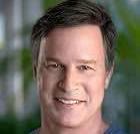
Hank Rogerson
Consulting Producer
Read bio
Hank Rogerson is a producer, director, writer, actor and teacher who works both in documentary and fiction film. He directed SHAKESPEARE BEHIND BARS, which won 11 awards. Hank most recently completed STILL DREAMING, an award-winning documentary about a group of retired Broadway entertainers who come out of retirement. He also co-produced, directed and edited HOMELAND, an award-winning documentary on the Pine Ridge Indian Reservation in South Dakota, as well as CIRCLE OF STORIES, a multi-media project that brings to life the vibrant art of Native American storytelling. Hank’s documentary work has won more than 20 awards, and has been broadcast on National PBS, Sundance Channel, Starz/Encore, Discovery Health Channel, BBC, Aljazeera, Canal+ and many more worldwide. He teaches filmmaking at University of New Mexico, and has also taught film production at University of Southern California.
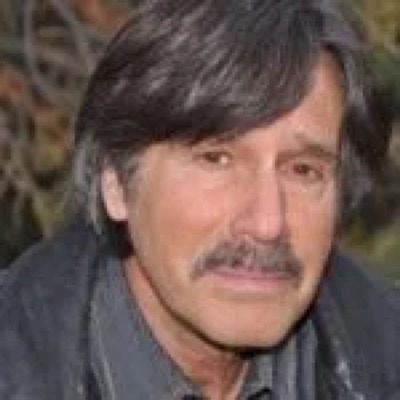
Miles Merritt
Consulting Editor
Read bio
Miles Merritt was writer/producer with New Century Images, a video production studio based in Los Angeles that specialized in the development of videos for private industry and various city departments. He later moved to NY to work with the cable news network in White Plains. In 1998, he moved to New Mexico to work on an arts and education program at Taos Pueblo. His directorial debut—the short film El Cochero [The Carriage Driver] (2004)—was produced in Mexico and was an official selection in 15 film festivals internationally. It was chosen as one of the opening night films at the prestigious Expresion En Corto Film Festival in San Miguel de Allende, Mexico, and won four awards. His subsequent short film, Una Causa Noble [A Noble Cause] (2007) was an official selection at 24 film festivals internationally and earned three awards. Miles was also Consulting Editor for the documentary The Second Cooler (2012), a film about immigration issues in the U.S. and Central America that was narrated by Martin Sheen. The film won five awards. Merritt's latest project is a feature documentary, Just A Mortal Man: The Jerry Lawson Story which PBS screened in 2022. He is a member of Artists 4 Peace, a global collective presenting works focused on peace and sustainable living.
You may contact Miles Merritt at:
M/K Productions, 7 Buen Pastor
Santa Fe, NM 87508
(505)466-4218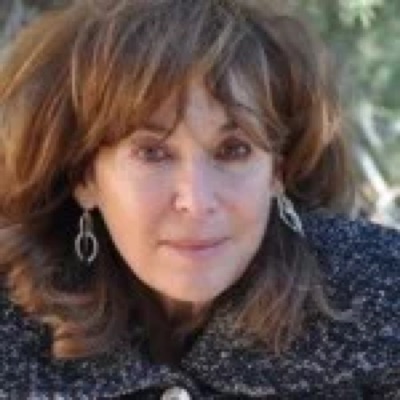
Gail Kempler
Consulting Editor
Read bio
Gail Kempler co-produced and edited the two award-winning short films El Cochero [The Carriage Driver] (www.elcochero.com) and Una Causa Noble [A Noble Cause] (www.unacausanoble.com), both of which were filmed in Mexico. From her work related to Una Causa Noble, she became involved in outreach in the area of immigration. She has also edited a number of corporate and special occasion videos.
She received her Ph.D. from the University of Minnesota and law degree from Fordham University and works as a patent attorney for a start-up biotech company developing stem cell based therapeutics.
You may contact Gail Kempler at:
M/K Productions, 7 Buen Pastor
Santa Fe, NM 87508
(505)466-4218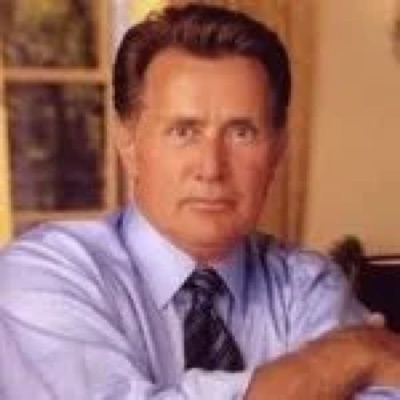
Martin Sheen
Narrator
Read bio
Martin Sheen is a stage, film, and television actor and a political activist. Born to an Irish immigrant mother and a Spanish immigrant father in Dayton, Ohio, his birth name is Ramon Gerard Antonio Estevez. He re-named himself Martin Sheen after Roman Catholic Bishop Fulton J. Sheen when he became an actor.
In 1965 Sheen received a Tony Award nomination for his role in The Subject Was Roses. He appeared in such television shows as Route 66, The Outer Limits, and My Three Sons before making his film debut in The Incident in 1967. In the 1970s Sheen had roles in Catch-22, adapted from Joseph Heller’s novel, Badlands (1973) co-starring Sissy Spacek and inspired by the story of serial killer Charles Starkweather, and Francis Ford Coppola’s Apocalypse Now (1979). He gave memorable performances in Gandhi (1982), Wall Street (1987), The American President (1995), and Catch Me if You Can (2002).
Martin Sheen’s television credits include The Execution of Private Slovik (1974) for which he received an Emmy Award nomination, The West Wing (1999-2006) in which he played President Josiah Bartlett and for which he won a Best Actor Golden Globe Award (2001), and an appearance on his son Charlie Sheen’s comedy Two and a Half Men. A recent film is The Way, directed by his son, Emilio Estevez.
Sheen is a pro-life, anti-nuclear weapons, pro-workers’ rights activist. He is particularly committed to closing the Western Hemisphere Institute for Security Cooperation, otherwise known as the School of the Americas, located on the Ft. Benning, Georgia military base. He believes that the Institute is closely associated with Latin American military dictatorships and political torture. He has been arrested numerous times for non-violent civil disobedience.
Martin Sheen has an honorary doctor of letters degree from Marquette University (2003). In 2007 he realized his lifelong dream of studying at the National University of Ireland in Galway. Notre Dame University awarded him the Laetare Medal, given to prominent Roman Catholics, in 2008.
Sheen generously donated his time, his talent, and his name to The Second Cooler..
People often ask how I got Martin Sheen to do the voice-over. Or as Consulting Producer ,Hank Rogerson, put it: "How did you get the Voice of God?" Here is the story: Handy Avery, Minister of Music at my church, asked how thing were going with the doc. I said that it was about time to find an actor to do the narration. He suggested Martin Sheen might be about right. I died laughing. Two weeks later, Handy called and asked if I was sitting down. Said Sheen had called the church himself, asked for Handy, they talked, and 30 minutes later, Sheen said, "Tell Ellin to come to Santa Monica in 3 weeks and we'll do it." (Bear in mind I had not yet written the script.) Turns out Handy had sent Sheen an email (don't ask me how he got his address). Sheen had been out of the country and when he got back and checked his email, there were about 40 people asking for his help. Nothing appealed until he got to Handy's. When he got through reading it, Sheen said tears were streaming down his face. I have asked Handy what on earth he said in that email. All he says is, "I did my best work in that email."
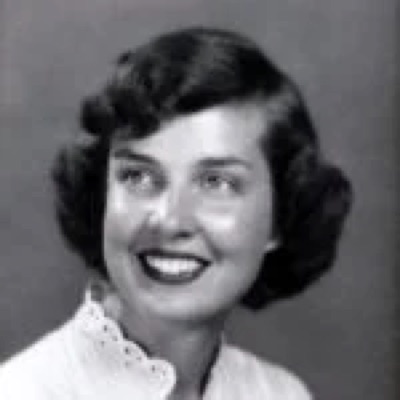
Elinor Sterne
Executive Producer
Read bio
Elinor Sterne was a social worker. During the 1950s and 1960s, she was a Civil Rights activist in Albany, Georgia, a town so infamous for the level of its racism and devotion to segregation that it became one of the first places targeted for civil rights resistance efforts by Freedom Riders. Under the notorious Sheriff Laurie Pritchett, it was the first town to jail Rev. Martin Luther King, Jr. Elinor Sterne and her lawyer husband, Edwin L. Sterne, were vocal opponents of segregation and racism.
In the mid-1960s, Elinor Sterne brought Head Start, a Federal summer school program aimed at providing a catch-up learning experience to low-income children. Many of the children in Sterne's program were African-American. In those hate-filled days prior to the Black is Beautiful movement, she resisted her culture by teaching the children in her care that they were both smart and beautiful. In doing so, she incurred the opprobrium of many of her friends, family members, and colleagues.
She and her husband housed Freedom Riders in their home, taught their daughters to say "Yes, Ma'am" and "No, Sir" to their black elders, and kept on keeping on even when the lives of their children were threatened by anonymous phone callers.
Reminiscing from her nursing home bed about those days and reflecting on her decision to give the producers of The Second Cooler their front money, she remarked, "Once you've demonstrated for freedom, it never gets out of your system."
Elinor Sterne (1927-2018) was Ellin Jimmerson's mother.
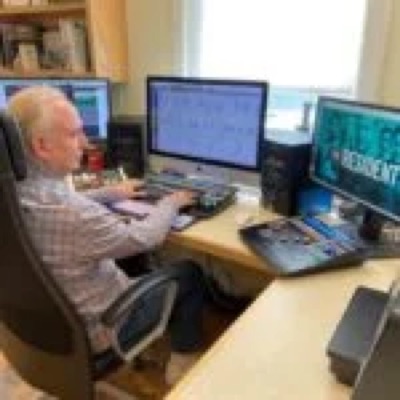
Bill Jackson
Sound Mixer
Read bio
Bill Jackson has been mixing documentaries, shorts, episodic television and records most of his life, and has earned an Emmy Award for outstanding Sound Mixing for HBO's Entourage. His other recent credits include House of Lies, How to Live with Your Parents, The Finder, Breaking In, and Awake. Jackson was a musician in his youth and spent much of his early career as a recording engineer in the record industry. He has engineered a number of gold and platinum records for such artists as Los Lobos and Sheila E, and was introduced to film work through composer Danny Elfman with whom he had worked on several album projects for the band Oingo Boingo.
Jackson is an Izotope Software Artist.
Documentaries that Jackson has mixed include The Long Bike Back, Behind the Blue Veil, The Paw Project, Fate of a Salesman, Granny's Got Game, Fight Like a Girl, Curtain Up, Surviving Disaster, Last Ride of the Chatham Bookmobile, Keeping the Kibbutz—PBS version, Rick Carter—A Day in the Life, Facing Forward, USIP, My Marilyn, C-C-Cut, Beyond the Mesas, Gullah, Beautiful Resistance, Whoosh, Bonus DVD for Lady and the Tramp 50th Anniversary Edition and Cinderella Special EditionDVDs.
Other Films for which he has either recorded and mixed music, or mixed the final dub of the film include Goldilocks (shot with an iPhone 4), Affliction, Albino Alligator, Army of Darkness, Article 99, Back To The Beach, Batman, Batman Returns, Beetle Juice, Bereft, The Big Squeeze, Cabin Boy, China Moon, Cold Blooded, Cold Feet, >em>Dark Man, Dead Presidents, Desperado, Dwegons, Edward Scissorhands, Face Like a Frog, Freeway, Ghostbusters II, Good Will Hunting, Hair Show, Heat, Hot to Trot, La Bamba, Little Big League, Meet the Deedles, Meet Wally Sparks, Midnight Run, Mission Impossible, Mississippi Burning, My Chauffeur, National Lampoon's Senior Trip, Night Canvas, NightBreed, Nightmare Before Christmas, No Small Affair, Onami, Orgazmo, Pass The Ammo, Pee Wee's Big Top, Phenomenon, Point Break, Purple Rain, Radioactive Dreams, Romy & Michele's High School Reunion, Scrooged, The Secret Garden, Shout, Shrunken Heads, Summer School, The Tigger Movie, Things to Do In Denver W/Y Dead, To Die For, Under Siege, Winter Sea, and Wisdom.
You may contact Bill Jackson at: 818.284.6412, mail@jacksonland.com.
Bill Schweikert
Cinematographer
Read bio
Schweikert is a freelance cinematographer based in Huntsville, Alabama, USA. He has 25 years filmmaking experience. His many credits include 20 Years After which was shown at the Cannes International Film Festival under the name Like Moles, Like Rats. He has shot numerous feature films, documentaries, and commercials in Alabama, Mississippi, New York, Arizona, Texas, Mexico, England, and elsewhere.
Adam Valencia
Cinematographer
Read bio
Adam Valencia is a filmmaker from Nogales, Arizona living in Los Angeles.
2015, his short film LOST WEEKEND was featured on Robert Rodriguez’s El Rey Network, and as a part of NALIP’s Latino Lens showcase. Remezcla was also kind enough to list him as one of the top 10 Latino filmmakers you should know.
His career began after graduating from the University of Arizona in 2010 with a BFA in film production. I then moved to Los Angeles where I’ve worked in music videos, documentaries, and branded content for the last 9 years, primarily as a cinematographer and editor. Over his career, he's been fortunate to work with brands such as Canon, Walgreens, Sprint, Nestle, Neutrogena, GStar Raw, Paramount Pictures, and AT&T. His latest short film CRYBABY is available to watch now.
He is also a drummer, comic book reader, and an all around nice guy.
“It didn’t take much to convince me to come onboard The Second Cooler] I can only hope that the journey we took in getting these interviews will likewise inspire others to ask questions, get involved, and more importantly, create change. Mask it what they will, this is an issue about human beings that are dying because of a system that seemingly gives them little or no option. I hope this film will make people stop and think the next time they walk into the grocery section of their local Super Wal-Mart.”You may contact Adam Valencia at: 520.313.9248, and at gigantisaurus@gmail.com
Matthew Wilson
Editing Assistant
Read bio
Matthew Wilson is a cinematographer, director, producer and editor who works in the commercial and documentary markets. His documentary filmmaking has sent him to eleven countries that span four continents. He shot the Rick Bragg Out of Dirt documentary that was released in the Fall, 2011.
Wilson was Ellin Jimmerson's editing assistant since the beginning of The Second Cooler project.
During his time as a Creative for Apple Inc., Wilson won numerous awards for his creativity. He also won a contest in which his cinematography was chosen for a worldwide Apple marketing campaign. He has recently developed skills for digital animation and is looking to bring that to the commercial and documentary markets. Wilson is currently accepting new projects. In his free time he enjoys spending time with his son, Elliot, and his wife, Megan. He is a sports fanatic and loves playing as much as he can. He also enjoys going to dinner and the movies.
You may contact Matthew Wilson at:
(256) 542-1207 or matthew@getawaken.com.
Rosa María Toussaint-Ortíz
Producer
Read bio
Rosa M. Toussaint-Ortiz was born in the Dominican Republic. Her mother died when she was seven years old and she was sent to Puerto Rico to live with relatives. A few months later, her visa expired and she became an undocumented migrant. When she was fifteen, the staff of the orphanage where she was living discovered she was undocumented and returned her to the Dominican Republic. She believes it was by the grace of God that she was able to return to Puerto Rico as a legal resident, re-enter the orphanage, and complete high school.
Toussaint-Ortiz joined the United States Army when she was eighteen years old. She was sent to Ft. McClellan near Anniston Alabama. She felt that, although she was ready to die for people in the U. S., she was unwelcome and unsafe in Anniston. Nonetheless, Toussaint-Ortiz, who achieved the rank of 2nd Lieutenant, became a U. S. citizen while she was in the Army. When she realized that Spanish-speaking soldiers with drug and alcohol problems received improper treatment because of the language barrier, Toussaint-Ortiz decided to become a counselor. After being discharged from the Army as an Enlisted, she earned a B. A. in Mental Health from the InterAmerican University of Puerto Rico. Most of her work has been as a social worker and case manager. Her desire to work with Spanish-speaking people in need was re-awakened in the late 1990s when undocumented migrants began to appear in large numbers in Alabama.
In 2007, she founded the Huntsville International Help Center ministry, which is associated with the Madison Baptist Association and the Interfaith Mission Service, Inc. The center provides information and referral for victims of domestic violence, parents and children involved with the Department of Human Resources, guest workers and others. In May 2010, Toussaint-Ortiz obtained a degree in paralegal studies. In September 2010, she started a home based business, Ortiz Consulting and Educational Services, doing business in English and Spanish.
You may contact Rosa Toussaint-Ortíz at:
http://www.saica.cc/chaplain.htm (Community Services Chaplain, SAICA, AL)
rosa@huntsvilletucasa.com
www.huntsvilletucasa.com
Marina Velez-Prucha
Documentary Translator
Read bio
Marina Vélez Prucha was born in Barranquilla, Colombia. She came to the United States in the 1960s. In 1971, she graduated from Westminster College in New Wilmington, PA with a degree in Spanish / French and in Education. She received her Master's Degree in Spanish Literature from Syracuse University in 1975.
Prucha has taught Spanish for thirty years, most recently at Randolph School in Huntsville, AL. She also works as a translator, including translating English to Spanish for The Second Cooler. In addition, she does volunteer and mission work. Prucha is married to Stephen J. Prucha and has two grown daughters. She has been a resident of Huntsville, Alabama since 1990.
You may contact Marina Vélez Prucha at: marinaprucha@gmail.com
Leslie Maxwell Kaiura, PhD
Documentary End Credits Translator
Read bio
Leslie Maxwell Kaiura is originally from Cairo, Georgia. She graduated with an M.A. in Spanish from Auburn University in 2003 and completed her Ph.D. at the University of Virginia in October of 2007. Her dissertation, which is entitled Battered Angels: Domestic Violence in Spanish Literature, 1850-1925, explores the subject of domestic violence using sources such as Spanish law, journalism, and literary works by five women authors. Her primary research interests are 19th and early 20th-century Spanish literature, with an emphasis on how gender issues are represented in literature and other media, such as the press and visual arts. Her articles have been published in the online journal Stichomythia: Revista de Teatro Contemporáneo and in the Arizona Journal of Hispanic Cultural Studies. She has presented her research at various conferences, including the 2007 Modern Language Association Convention, and she is currently revising her dissertation into a book manuscript for publication.
Dr. Kaiura has over ten years of teaching experience, and currently teaches all levels of Spanish courses at the University of Alabama Huntsville. In addition to her interest in teaching culture and literature, she also has a particular interest in teaching medical Spanish and Spanish for other professional applications. She has also studied and travelled in Mexico and Spain.
Sherry Broyles, Natasha Diez, and Melanie Faithful
Post-Production Assistance
Read bio
Sherry Broyles has an undergraduate degree in Fine Art and a J. D. from Vanderbilt Law School. In addition to working as an attorney and mediator, she has experience as an artist, actor, and grant administrator. Broyles was in charge of the North Alabama distribution of John Sayles’ film, “Honeydripper.” She was a producer for “Like Moles, Like Rats,” an independent film made in Huntsville, Alabama starring Joshua Leonard and Reg E. Cathey.
Natasha Diez is headquartered in Mexico City. She has a degree in international affairs from Universidad Autonoma de Mexico and a Master’s degree in international business. Her work experience includes jobs with Fundacion Juan de la Cosa and the European Parliament. She has experience in television and academic publishing. she worked for a Mexican cable station, Unicable, on a talk show for teenagers.
Melanie Faithful has over 20 years of experience in marketing and publishing, with experience in both the trade and academic arenas. She has devoted the past 10 years to academic publishing initiatives in Latin America. Politically active since 1979, she has a sustained interest in human rights, peace and justice, and the environment.

Angelica Arango
Assistant Producer, USA
Read bio
Angelica Arango works in Spanish media as a producer for radio and television in New York and elsewhere. She also has experience in copy-writing and public relations. Arango has volunteered for non-profit organizations helping immigrants. As an assistant producer for The Second Cooler, she combined her production skills and her passion for working for social justice.
Additional Production Assistance
Read bio
Melissa Bailey, Jordan Bullard, Jeannie Economos, Miguel Angel Montalvo, Esq., Caitlin Ryland, Joanna Wellborn, Brenda Bullock, Sr. Obdulia Olivar, Sr. Elsi Rosa Reyes, Sr. Rose Marie Martell, and Paul Rodríguez, Migrant and Guest Worker Interviews
Bailey is originally from a small coal mining community in southern West Virginia. She has worked for Lenoir County Migrant Education for the past seven years as a recruiter. She is a co-founder of the Migrant Education Outreach Cooperative in eastern North Carolina. Her personal goal is to eradicate the social, economic, academic, and labor injustices faced by child laborers in agriculture. Toxic Free North Carolina is a group of emerging and experienced leaders from across North Carolina who work together to reduce pesticide pollution. They are an energetic and diversely talented community of leaders who find common ground and inspiration in each other's efforts for farmworker health and justice, clean and healthy food for rural communities, toxic-free spaces for children, and much more. To find out more about Toxic Free North Carolina, please visit http://www.toxicfreenc.org.
You may contact Melissa Bailey at (919) 833-5333.Jordan Bullard was with Prospect Hill Community Health Center in Caswell County, North Carolina, offering health care services to guest workers. He also provided songs for The Second Cooler including Samuel in Chains which was inspired by time among agricultural guest workers.
Jeannie Economos is with Farmworker Association of Florida. Its long-standing mission is to build power among farmworker and rural low-income communities to respond to and gain control over the social, political, workplace, economic, health, and environmental justice issues that impact their lives. FWAF's guiding vision is a social environment where farmworkers' contribution, dignity, and worth is acknowledged, appreciated, and respected through economic, social, and environmental justice. This vision includes farmworkers being treated as equals, and not exploited and discriminated against based on race, ethnicity, immigrant status, or socioeconomic status. Economos has worked for over 20 years on issues of the environment, environmental justice, indigenous and immigrants’ rights, labor, peace, and social justice. Since 2007, she has been the Pesticide Safety and Environmental Health Project Coordinator for the Farmworker Association of Florida, coordinating pesticide trainings for farmworkers in Florida, identifying workplace violations of Worker Protection Standards, and conducting health care provider trainings on pesticide exposure of farmworkers. She is also engaged in local, state, national, and international coalitions and collaborations related to farmworker rights and health and safety, pesticide reduction, sustainable agriculture, and food sovereignty. She is currently co-coordinator of the Lake Apopka Farmworkers Memorial Quilt Project whose purpose is to raise awareness about the impacts of pesticides on the former farmworkers on Lake Apopka.
To find out more about Farmworker Association of Florida, please visit www.floridafarmworkers.org.
You may contact Jeannie Economos at (407) 886-5151.Miguel Angel Montalvo was a lawyer specializing in migrant farm worker rights. A member of the Florida Bar Association, his law degree is from the Creighton University School of Law in Omaha, Nebraska. He was fluent in English and Spanish. A native of Guanajuato, Mexico, Montalvo went to the United States as an agricultural worker harvesting tomatoes and fruit in Immokalee, Florida. He went on to teach English as a second language to prisoners at Hendry County Correctional Institution. After an internship with the Florida Rural Legal Services in Belle Glade, Florida, he joined its migrant farmworker workgroup as an attorney where he worked from 1994-1998. Afterwards, he founded his own practice in Immokalee, Florida where he specialized in criminal defense, family, worker's compensation, immigration, and personal injury cases. In 2010, Montalvo returned to Guanajuato, Mexico. He offers on-call legal assistance conducting outreach and worker education throughout Mexico for legal proceedings in the United States. He was the owner of El Tapanco in Salvatierra, Guanajuato, a business which produces grass fed, antibiotic, and steroid free organic cattle and fine grains.
Caitlin Ryland is an attorney with Legal Aid of North Carolina, Farm Worker Unit in Raleigh. The Farmworker Unit is committed to providing high quality civil legal services to address the special legal needs of migrant and seasonal farmworkers in North Carolina. To find out more about Legal Aid of North Carolina, please visit http://www.farmworkerlanc.org.
You may contact Caitlyn Ryland at (919) 856-2187.Joanna Wellborn is with Student Action with Farmworker. She was born and raised in the foothills of Western North Carolina. While studying Sociology and Spanish at Appalachian State University, she participated in the Into the Fields Internship in 1996. She has studied documentary photography at the Salt Institute for Documentary Studies in Maine and at Duke's Center for Documentary Studies. Student Action with Farmworkers is a 501(c)3 non-profit organization whose mission is to bring students and farmworkers together to learn about each other’s lives, share resources and skills, improve conditions for farmworkers, and build diverse coalitions working for social change.
SAF works with farmworkers, students, and advocates in the Southeast and nationwide to create a more just agricultural system. Since 1992, SAF has engaged thousands of students, farmworker youth, and community members in the farmworker movement.
For more information on Student Action With Farmworkers, please visit saf-unite.org.
You may contact Joanna Wellborn at (919) 660-3693.Sr. Obdulia Olivar is a member of the Roman Catholic Guadalupan Missionaries of the Holy Spirit, a priestly Guadalupan Mission. She works with illegal migrants, guest workers, and other Latinos in the area around Montgomery, Alabama.
Sr. Elsi Rosa Reyes is a member of the Roman Catholic Guadalupan Missionaries of the Holy Spirit, a priestly Guadalupan Mission. She works with illegal migrants, guest workers, and other Latinos.
Sr. Rose Marie Martell is an immigration specialist with Catholic Social Services in Montgomery, Alabama. She is a member of the Missionary Servants of the Most Blessed Trinity, a congregation of Roman Catholic sisters which serves in economically depressed areas.
Paul Rodríguez is a landscaper in Huntsville, Alabama.
Ellin Jimmerson
Writer, Producer, Director, Editor
Read bio
Ellin Jimmerson has a Masters in Southern History from Samford University in Birmingham, Alabama, a Ph. D. in 20th Century United States History from the University of Houston, Texas, and a Masters in Theological Studies from Vanderbilt Divinity School with a concentration in Latin American liberation theology. An ordained Baptist minister, she was Minister to the Community at Weatherly Heights Baptist Church in Huntsville, Alabama, USA from 2008-2015. Because her parents were Civil Rights Movement activists during the 1950s and 1960s in Albany, Georgia and Birmingham, Alabama, she cut her teeth on social justice issues.
People in the film
Scott Beason
Read bio
Scott Beason (R) served two consecutive terms in the Alabama House of Representatives before being elected a Senator from the 17th District. The 17th District includes Jefferson County where Birmingham is located. Beason is a member of the Jefferson County Republican Executive Committee and the Alabama Republican Executive Committee.
Beason, who is from Gardendale, Alabama, is one of the most conservative members of the Alabama Legislature. He is a leading opponent of illegal immigration and of the outsourcing of U. S. jobs.
Beason was Vice-Chairman of the Alabama Legislature’s Joint Interim Patriotic Immigration Commission which was established to “conduct a fact finding study on immigration issues and to issue a commission report outlining suggestions and proposals to address the issues of illegal and legal immigration in Alabama.”
Jimmy Baker
About
Jimmy Baker owns Baker Hosiery in Fort Payne, Alabama, USA. He is an opponent of free trade agreements, in particular the Central American Free Trade Agreement which adversely affected the textile industry in Fort Payne.
Stewart Burkhalter
About
Stewart Burkhalter is President of the Alabama American Federation of Labor-Congress on Industrial Organization (AFL-CIO) in Montgomery, Alabama.
Boyd F. Campbell
Read bio
Boyd F. Campbell is an attorney in Montgomery, Alabama whose practice primarily is devoted to private international law and foreign investment, international labor and employment law, immigration and nationality law, commercial transactions and formation of business organizations, federal administrative procedures, and civil law notarial functions.
Campbell is an active member of the American Immigration Lawyers Association (AILA). He served as chair of the International Law Section of the Alabama State Bar from 2000 to 2002 and is a founding member of that section. He has served as co-chair of the American Bar Association’s (ABA) Immigration Law Committee’s Section on Labor and Employment Law. He was a member of the ABA’s Coordinating Committee on Immigration Law from 1994 to 1998.
Campbell provides legal services and personal and corporate legal representation to US citizens, foreign nationals, and multinational corporations in the US and abroad. He established the Alabama Center for Foreign Investment, LLC, Alabama’s federally designated, statewide Regional Center, and was appointed its General Counsel in 2006.
In 2008, Campbell was a member of the Alabama Legislature’s Joint Interim Patriotic Immigration Commission.
Patriciano Paraza García
Read bio
Patriciano Paraza García es sacerdote en el Centro Comunitario de Atención al Migrante y Necesitado, Altar, Sonora, México. Altar es un punto principal de encuentro de migrantes y coyotes [traficantes] para prepararse a cruzar la frontera entre México y los EE.UU.
P. Paraza les aconseja a los migrantes que están para cruzar sobre los peligros graves asociados con cruzar. También les aconseja a los migrantes repatriados de los EE.UU.
Hipólita Acuña Valenzuela
Read bio
Hipólita Acuña Valenzuela is a former Mexican migrant. She and her husband crossed the border illegally three times with their young children. Later she became an employee of Borderlinks, Mexico and was able to obtain a visa. She was one of Ellin Jimmerson’s principle guides in Sonora, Mexico.
Pete Barber
About
Pete Barber is the owner of Bay Breeze Enterprises and Executive Director of the Alabama Seafood Commission. Located in Bayou La Batre, Alabama on the Gulf Coast, Barber has experience with the U. S. Department of Labor’s guest worker program.
Mary Bauer
Read bio
Mary Bauer is an attorney who directed the Southern Poverty Law Center’s (SPLC) Immigrant Justice Project from 2004 to 2009. In 2009, she was named the SPLC’s legal director. Bauer has directed groundbreaking lawsuits aimed at enforcing the rights of immigrants, foreign guest workers, and migrant farm workers.
Before joining the SPLC, Bauer was the legal director of the Virginia Justice Center for Farm and Immigrant Workers, the legal director of the Virginia ACLU, and an attorney for a legal services program. She is the author of two SPLC reports that have gained national attention—Close to Slavery: Guestworker Programs in the United States and Under Siege: Life for Low-Income Latinos in the South.
Bauer has testified before the U. S. Congress on issues involving the exploitation of migrant workers.

Miguel Angel Montalvo Chavez (1958-2019)
Read bio
Miguel Angel Montalvo Chavez was born in a small rural village in central Mexico. From very humble beginnings, through hard work and determination Miguel went from picking tomatoes to learning english, studying at Florida International University and eventually earning his J.D. from Creighton University. He was a member of the Florida Bar and dedicated his life to defending the rights of the underprivileged and migrant farmworkers throughout the United States.
His tireless work and advocacy on behalf of his clients has impacted the lives of innumerable people. After moving to his ranch in Mexico, Miguel continued his advocacy on behalf of the farmworker and immigrant community, and in particular on behalf of H2A and H2B guestworkers. In the past ten years, Miguel’s tireless and almost legendary efforts allowed U.S. based advocacy groups to reach an entirely new level of effectiveness in combating the worst abuses of guestworkers in the US. Several legal precedents of national importance are a direct result of Miguel’s work.
Miguel never forgot his humble roots believed that every person no matter their background or station in life deserved to be treated with the utmost respect. He had an easy smile and a quick wit. A cowboy at heart, Miguel also was a talented artist, a lover of the great outdoors, and an avid reader of great literature.
Miguel Montalvo offered his testimony about the H2 guest worker program for The Second Cooler. In addition, he acted as a producer for the H2 sequence, organizing interviews, driving director, Ellin Jimmerson, and cinematographer, Adam Valencia, to numerous far flung spaces, with his wife, Laura Vasquez, offering his home and hospitality to them, and interpreting. He was a wonderful man.
H2 Guest Workers
Omar Candelaria
About
Omar Candelaria is Public Relations Officer with the United States Border Patrol, Nogales, Arizona sector. According to Candelaria, the primary mission of the US Border Patrol is anti-terrorism.
Manuel Celaya Burruel
About
Manuel Celaya Burruel is Director of Human Rights at the Center for Attention to Migrants and Their Needs in Altar, Sonora, Mexico.
Brett Dungan
About
Brett Dungan is the manager of Master Marine, a shipbuilding business in Bayou La Batre, Alabama, USA. He testified before the Alabama Legislature about his desire for more guest worker visas.
"Suave Eros"
About
“Suave Eros” migrated from northern Mexico, crossing through Arizona’s Sonora Desert.
John Fife
Read bio
John Fife is Pastor Emeritus of Southside Presbyterian Church in Tucson, Arizona. He served there for 35 years.
According to Fife, in the early 1980s, the United States government, under President Ronald Reagan, offered political, economic, and military support to government-sponsored death squads in El Salvador and Guatemala. Entire villages were massacred. Refugees poured out. The international community pressured the United States to recognize the victims as refugees and offer them temporary asylum until conditions changed in their countries and they could return.
The United States government refused to recognize them as refugees. Instead, when U. S. agents picked a refugee up on the border or in communities around the country, they put the refugees in detention centers then returned them to the death squads in handcuffs.
According to Fife, the “deportation to death had to be resisted.” In 1981, Southside Presbyterian was the first church in the country to offer sanctuary to Central American refugees. It launched what became known as the Sanctuary Movement which eventually provided safe haven to thousands of refugees in over 500 churches and synagogues around the country. This “new underground railroad” moved people at highest risk to Canada which respected refugee rights.
In response, the US government infiltrated the churches and synagogues, according to Fife, with agents pretending to be volunteers.
In 1986, the government brought alien-smuggling charges against Fife and others including two Catholic priests, five men and women religious, and the Director of the Tucson Ecumenical Council. During the trial, the judge prohibited the defendants from speaking about five subjects: international refugee law, United States refugee law, conditions in El Salvador, conditions in Guatemala, and religious faith.
Fife was convicted and served five years probation.
According to Fife, the US government is continuing its violation of human rights on the border. It has instituted a border enforcement policy involving militarization and death as a deterrent to illegal crossing. Fife calls the strategy of deterrence a “gross violation of human rights.”
To resist this strategy of deterrence, Fife co-founded No More Deaths whose volunteers try to save the lives of migrants in Arizona’s Sonora Desert. In 2002, he co-founded Samaritan Patrol whose volunteers take food, water, and first aid supplies to migrants in the desert.
Fife continues to call attention to US policy and high-level officials who, he believes, continue to illegally and unconstitutionally violate human rights and international law with its border and other policies.
Based on an interview with Amy Goodman, Democracy Now!, April 23, 2007.
Jerry Foster
Read bio
In Birmingham, Alabama, Jerry Foster represents the Retail, Wholesale, and Department Store Workers Union. The RWDSU is a semi-autonomous division of the United Food and Commercial Workers labor union and is associated with the Change to Win Federation. Foster encourages migrant workers to join the union.
Garry Frost
About
Garry Frost is President of the AFL-CIO’s [American Federation of Labor-Congress on Industrial Organization] Northeast Alabama Labor Council in Gadsden, Alabama, USA. He also is President of the Plumbers and Steamfitters Union, Local 498.
Raquel Rubio Goldsmith
Read bio
Raquel Rubio Goldsmith, Ph. D., is Co-ordinator of the Binational Migration Institute of Mexican American studies as well as a lecturer in the Department of Mexican American and Raza Studies at the University of Arizona in Tucson, Arizona, USA.
A Chicana native of Douglas, Arizona, Rubio-Goldsmith completed undergraduate and graduate degrees in Law and Philosophy at the National Autonomous University of Mexico. She has taught at Pima Community College since 1969 and, since 1983, at the University of Arizona where her focus has been the history of Mexicanas and Chicanas.
Rubio-Goldsmith has taught courses on Mexican and Latin American history and has developed curricula on Afro-American, Yaqui, and Tohono O’odham histories. Her research interests include Mexican women on the U. S. / Mexico border and women who fled the Mexican Revolution to southeastern Arizona. She is an activist committed to immigration rights, women’s rights, and civil rights in general. She is active with Pueblo Por La Paz in Tucson and with the National Commission for Democracy in Mexico.
"Julio Gómez"
About
“Julio Gómez” is a migrant from Mexico City. He crossed illegally six or seven times between 1992 and 2006.
“María Gómez Rodríguez”
About
“María Gómez Rodríguez” is the daughter of peasant farmers in southern Mexico. She migrated alone when she was 23 through Arizona’s Sonora Desert. She met her husband, “Juan Rodriguez,” at a church in Alabama.

“Miguel Ángel González”
About
“Miguel Ángel González” is a Mexican architect who crossed illegally through Arizona in 1998.
Marie Gray
About
Marie Gray is Alabama State Director of the Minutemen Civil Defense Corps.
Robert Calvin “Bob” Harrison
About
Bob Harrison is a member of the Madison County [Alabama] Commission. Harrison opposed Canadian-owned manufacturer CINRAM’s policy of using guest workers at its Huntsville, Alabama, USA plant.
“Pedro Hernández”
About
“Pedro Hernández” is an indigenous migrant from Oaxaca, Mexico. His first language is Chinanteco, a Native American language.
José Juan Martínez
Read bio
José Juan Martínez is an official with Mexico’s Federally-run Grupos Beta in Nogales, Sonora, Mexico.
Grupos Beta’s workers function as federal police, medics, and social workers. They try to deter migrants planning to cross and rescue those who have attempted to cross and have become injured or lost. They also arrest the “coyotes” (human smugglers) who guide them into the United States in violation of the laws of both countries.
“Alejandra León”
About
“Alejandra León” is a migrant from Guatemala. She crossed with her two young children , “Sam” and “Elizabeth,” through Arizona’s Sonora Desert.
“Elizabeth León”
About
“Elizabeth León” is a Guatemalan migrant who crossed illegally through Arizona’s Sonora Desert. She crossed when she was four years old with her brother, “Sam León” and her mother, “Alejandra León.”
"Sam León"
About
“Sam León” is a Guatemalan migrant who crossed illegally through Arizona’s Sonora Desert. He crossed when he five years old with his sister, “Elizabeth León” and his mother, “Alejandra León.”
Heath Locklear
About
Heath Locklear owned Locklear Hosiery in Fort Payne, Alabama, USA. After the implementation of the Central American Free Trade Agreement, he was forced to sell his factory.
Sister Rose Marie Martell
Read bio
Sister Rose Marie Martell is an immigration specialist for Catholic Social Services in Montgomery, Alabama, USA. She is a member of the Missionary Servants of the Most Blessed Trinity, a congregation of Roman Catholic sisters founded in Holy Trinity, Alabama in 1918. The congregation usually serves in economically depressed areas.
“Guadalupe Martínez”
About
“Guadalupe Martínez” is Guatemalan mechanic who crossed illegally into the U. S. through Arizona’s Sonora Desert.
Sean O'Donnell
About
Sean O’Donnell is an organizer with the International Association of Heat and Frost Insulators and Allied Workers, Local 78, in Birmingham, Alabama, USA.
"Margarita Padilla"
About
“Margarita Padilla” is a migrant from Michoacan, Mexico. She has been in the U. S. since 1993.
Robin Redondo
About
Robin Redondo is a volunteer with Samaritans, an interfaith group which looks for injured or abandoned migrants in the Sonora Desert. They carry food, water, and first aid supplies to them. Samaritans is based in Tucson, Arizona, USA.
Jay Reed
Read bio
Jay Reed is President of the Alabama chapter of Associated Builders and Contractors. Based in Birmingham, Alabama, USA, he also has served as staff liaison to the Association’s legislative committee, as treasurer of their Merit Political Action Committee, and as publisher of Alabama Construction News. During 2007-2008, Reed was chair of the Alabama Legislature’s Joint Interim Patriotic Immigration Commission.
“Juan Rodríguez”
Read bio
“Juan Rodríguez” is the son of small business people in Vera Cruz, Mexico. He crossed illegally through Arizona’s Sonora Desert for the first time when he was 15 years old. He met his wife, “María Gómez Rodríguez” at a church in Alabama. They now have two children who are U. S. citizens.
"Diego Sánchez"
About
“Diego Sánchez” migrated illegally from Mexico crossing through the Rio Grande.
Pedro Rivas
Read bio
Pedro Rivas migrated illegally from El Salvador. In 2000, following an earthquake in El Salvador, he and other Salvadorans were given a temporary protected status, giving them a legal status in the U. S.
He was with Hispanic Ministries of Dothan, Alabama, USA when we interviewed him.
"Roberto Segura"
About
Mexican migrant Roberto Segura crossed illegally through Arizona’s Sonora Desert with his mother and younger brother when he was nine years old. He was twelve years old when we interviewed him.
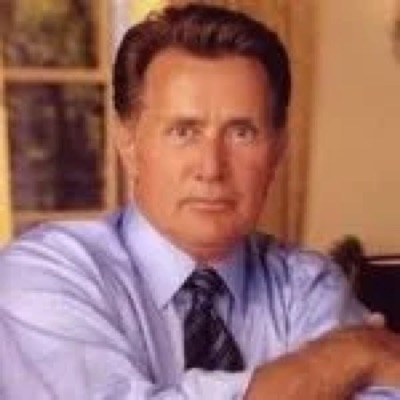
Martin Sheen
Narrator
Read bio
Martin Sheen is a stage, film, and television actor and a political activist. Born to an Irish immigrant mother and a Spanish immigrant father in Dayton, Ohio, his birth name is Ramón Gerard Antonio Estevez. He re-named himself Martin Sheen after Roman Catholic Bishop Fulton J. Sheen when he became an actor.
In 1965 Sheen received a Tony Award nomination for his role in The Subject Was Roses. He appeared in such television shows as Route 66, The Outer Limits, and My Three Sons before making his film debut in The Incident in 1967. In the 1970s Sheen had roles in Catch-22, adapted from Joseph Heller’s novel, Badlands (1973) co-starring Sissy Spacek and inspired by the story of serial killer Charles Starkweather, and Francis Ford Coppola’s Apocalypse Now (1979). He gave memorable performances in Gandhi (1982), Wall Street (1987), The American President (1995), and Catch Me if You Can (2002).
Sheen’s most recent movie is The Way (2010 )directed by his son Emilio Estevez.
Martin Sheen’s television credits include The Execution of Private Slovik (1974) for which he received an Emmy Award nomination, The West Wing (1999-2006) in which he played President Josiah Bartlett and for which he won a Best Actor Golden Globe Award (2001), and an appearance on his son Charlie Sheen’s comedy Two and a Half Men.
Sheen is a pro-life, anti-nuclear weapons, pro-workers’ rights activist. He is particularly committed to closing the Western Hemisphere Institute for Security Cooperation, otherwise known as the School of the Americas, located on the Ft. Benning, Georgia military base. He believes that the Institute is closely associated with Latin American military dictatorships and political torture. He has been arrested numerous times for non-violent civil disobedience.
Martin Sheen has an honorary doctor of letters degree from Marquette University (2003). In 2007 he realized his lifelong dream of studying at the National University of Ireland in Galway. Notre Dame University awarded him the Laetare Medal, given to prominent Roman Catholics, in 2008.
Fred Shepherd
Read bio
Fred Shepherd is Chair and Professor of the Department of Political Science at Samford University in Birmingham, Alabama. His book, Christianity and Human Rights: Christians and the Struggle for Global Justice, published by Lexington Press, came out in 2009. He has contributed to numerous books and journals on Latin America, religion, and politics. Shepherd’s current work focuses on genocide and human rights.
Shepherd has been affiliated with the Lilly Foundation, the Holocaust Education Fund, and the Center for Advanced Holocaust Studies at the U. S. Holocaust Memorial and Museum. He has been an invited presenter at the International Association for Genocide Scholars. He was Co-Director of the 2004 Lilly Fellows National Research Conference on Christianity and Human Rights, is the political analyst for CBS’s affiliate station in Birmingham, and serves as Amnesty International’s Legislative Coordinator for the state of Alabama. He is currently at work on studies of comparative genocide with a special focus on Guatemala.
Shepherd’s upper-level teaching includes Politics in Developing Nations, U. S. Foreign Relations, and Latin American Politics, Genocide, and Human Rights.
Klari B. Tedrow
Read bio
Klari B. Tedrow is the owner of the firm, Klari B. Tedrow LLC and is co-founder of Tedrow and Myers Immigration Law Group, dedicated to the practice of immigration and nationality law. She represents a wide variety of domestic and multinational corporations, non-profits, educational institutions, entrepreneurs, professionals, individuals and families in all aspects of business and family-based immigration, including temporary and long-term visas, employment authorization, permanent resident status (green cards) and naturalization. She provides her clients with effective corporate and transnational HR strategies to maximize business and immigration benefits. Tedrow regularly represents clients before the Citizenship and Immigration Service, US Embassies and Consulates around the world, the US Department of State, the Department of Health and Human Services, the Department of Labor, and State Departments of Public Health. She possesses an abundance of experience representing foreign physicians and foreign healthcare workers.
An adjunct professor at The Cumberland School of Law, Samford University since 1999, and a frequent speaker on current immigration issues, Tedrow carefully monitors developments in immigration law and policy and provides her clients with strategic advice concerning both short and long-term immigration alternatives.
Tedrow currently serves as the First Vice-Chair of the Atlanta Chapter of the American Immigration Lawyers Association covering Alabama and Georgia, and has served on various committees including advocacy for immigration law reform and specific immigrant and immigration law issues before being elected to the executive board in 2009.
Tedrow is the author of numerous speeches and articles on immigration issues. Her awards include Best of the Bar by her peers and one of the Best Lawyers in America for 2001.
Tedrow brings a singular and personal interest in immigration to her practice. She is a naturalized citizen who came to the United States from Budapest, Hungary as a refugee. Her parents had escaped the violent Hungarian Revolution of 1956 by swimming a large waterway into Austria with their two small children—Klari and her sister.
Marcela Vásquez-León
Read bio
Marcela Vásquez-León was born and raised in Bogotá, Colombia. She has a Ph. D. in Anthropology and an M. S. in Agricultural Economics from the University of Arizona. She has a joint appointment at the Bureau of Applied Research in Anthropology and at the Center for Latin American Studies at the University of Arizona in Tucson.
Vásquez-León’s research interests include environmental anthropology, political ecology, fisheries management and maritime anthropology, rural development and agricultural cooperatives, environmental justice, and human dimensions of global environmental change. Her research focuses on the interrelationships between human agency and large-scale structures, with an emphasis on how contradictory processes occurring at a global scale (e.g. neoliberalism and environmentalism) affect state policy, scientific management of natural resources, notions of “sustainable development,” and environmental conservation.
Vásquez-León has on-going projects in the areas of Gulf of California Fisheries, Farming in the Sonora Desert, and Grassroots Collective Organization in rural South America which is funded by the United States Agency of International Development (USAID).
Among her publications are Free Markets and Fair Trade: Collective Livelihood Struggles, The Cooperative Model: Two Case Studies from Paraguay and Walking the Tight Rope: Latin American Agricultural Cooperatives and Small Farmer Participation in Global Markets.
Terry Waters
About
Terry Waters is the owner / operator of Waters Nursery in Robertsdale, Alabama, USA. He employs undocumented migrants and testified before the Alabama Legislature about his desire for more guest worker visas.
Scott Whiteford
Read bio
Scott Whiteford is Director of the Center for Latin American Studies at the University of Arizona in Tucson. His research integrates issues in economic development, political ecology, environmentalism, migration, social movements, and power. Whiteford has collaborated with colleagues from Argentina, Mexico, and the US border. / Mexico for their most recent research. He has conducted additional research in Nicaragua, Costa Rica, Colombia, and Ecuador.
The Hewlett Foundation, the Ford Foundation, the Fulbright Commission, the National Science Foundation, the National Endowment for the Humanities, and the Center for Advanced Study of International Development have funded their research. He has served on several scholarship review juries including the National Science Foundation, the Inter-American Foundation, and the Fulbright Commission.
At the University of Arizona Center for Latin American Studies, Whiteford teaches a graduate seminar on "Immigration, Inequality, and the Frontiers of the Americas." He also teaches with others an undergraduate seminar on and the US border. / Mexico.His numerous publications include:
The Impact of NAFTA on Small Farmers in Mexico, co-edited with Juan Rivera and Manuel Chávez, New York: Scranton University Press, Political Ecology in the Water Culture of Querétaro, co-edited with Sergio Quesada Aldana. Querétaro: Autonomous University of Querétaro, 2006, Security, Water and Development: The Future of the United States-Mexico Border, co-edited with Alfonso Andrés Cortez Lara and Manuel Chávez Márquez, Tijuana: College of the Northern Border, 2005, Globalization, Water, and Health: Resource Management in Times of Scarcity, co-edited with Linda Whiteford, Santa Fe: School of American Research, 2005, Managing a Sacred Gift: Changing Water Management Strategies in Mexico, co-edited with Roberto Melville, La Jolla: Center for United States / Mexico Studies, University of California, San Diego, 2002, New Political Economy of Globalization and Regional Blocks, co-edited with Manuel Gomez Cruz, Rita Schwentesius, and Manuel Chavez, Mexico: Autonomous University of Chapingo, 2001, Crossing Currents: Continuity and Change in Latin America, co-edited with Michael Whiteford, Upper Saddle River: Prentice Hall, 1998, and Workers from the North: Plantations, Bolivian Labor and the City in Northwest Argentina , Austin: University of Texas Press, 1981.Chuck Williams
About
Chuck Williams is a manufacturing engineer in Huntsville, Alabama, USA. He spent time in Mexican maquiladoras [foreign owned assembly plants] while working for a Huntsville-based business.
Mike Wilson
Read bio
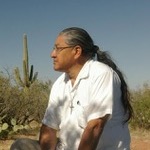
Michael S. “Mike” Wilson is a member of the Tohono O’odham Nation located in northern Mexico and Arizona. He is retired from the United States Army. He was a member of the Army’s Special Operations and was a military advisor in El Salvador in the late 1980s.
Wilson has defied tribal leadership’s ban on placing gallon jugs of water on reservation lands for use by for illegal migrants traveling through them.
Artists and musicians
Mizue Aizeki
Visual Artist
Read bio
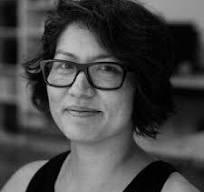
Mizue Aizeki is a documentary photographer and social justice organizer based in New York, New York. Aizeki works primarily at the intersection of the criminal justice and immigration system to stop the deportation of immigrants with convictions.
Her photographs have appeared in many publications including Dying to Live: A Story of U. S. Immigration in an Age of Global Apartheid, by Joseph Nevins (City Lights Books, 2008) and in journals and newspapers including Colorlines, The Progressive, L. A. Weekly, The Wall Street Journal, Z Magazine, and The Nation. Her projects include Palestinian refugees in the Israeli-occupied West Bank and Gaza, immigrant deportees and their families, taxi worker organizing in New York City, and Mexican migrants in New York.
Jordan Bullard
Songwriter / Performer
Read bio
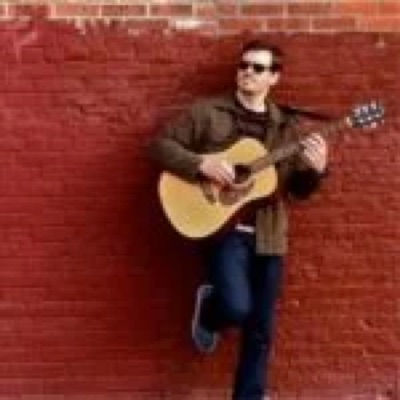
Jordan Bullard is a singer / songwriter from Mt. Pleasant, South Carolina who lives and works in New York City. He accompanies himself with guitar, cello, and harmonica. He graduated from Presbyterian College in Clinton, South Carolina in 2006. He received a Masters degree in Spanish in May, 2009 from Winthrop University in Rock Hill, South Carolina.
After graduating, Bullard spent a year in Agua Prieta, Sonora, México with Frontera de Cristo, a border ministry co-sponsored by the National Presbyterian Church of Mexico and the Presbyterian Church USA. In Agua Prieta, he was US Coordinator of the Migrant Resource Center located outside the Douglas, Arizona, USA port of entry. The Center ministers to migrants who have been deported to México after attempting to cross into the United States. Among other things, it documents human rights abuses experienced by migrants while in custody of US authorities.
In 2010, Bullard recorded a seven song album called Border Songs: Movers, Shakers, and Prayers. His searing, highly-personal songs are documents of his experiences filtered through the Bible and Christianity.
Bullard lent three of them to The Second Cooler. “Commonwealth” interprets a passage from the book of Ephesians and is a prayer of hope that the US will bring down the dividing wall of hostility and be unified as citizens of the community of God. “Geronimo’s Daughter” was inspired by Domitila Geronimo Silva, from Guerrero, Mexico, an indigenous woman who spoke very little Spanish. A Border Patrol agent had hit her in the back with a rifle. While the Migrant Resource Center was documenting the assault, employees of the Mexican Consulate came and documented it as well. They took “a very awkward and sad picture of her. Domitila (Geronimo’s Daughter) was not happy to have her photo taken. The bit about manufactured dreams of men in suits and ties is me addressing the American Dream. Because I saw countless American Dreams dashed while I was on the border. I was feeling helpless. I wanted to communicate my belief that blessed are the poor, for theirs is the kingdom of God. Why do we continue to hurt them? Why do we not treat people as blessings?” “Birmingham” was recorded for The Second Cooler at Ellin Jimmerson’s request. Bullard wrote it after meeting a guy named Sergio in Agua Prieta who had been a green energy technician in Texas working on windmills. He was married to a US citizen and had two children who were US citizens. He wanted to do the right thing and get his papers in order. He went to the US Embassy in Ciudad Juarez where he was told he could live legally in the US if he returned to Mexico for two years. That meant two years away from his wife, his kids, his work. So he had no option but to cross back into the US. The song was written in the midst of SB 1070 fervor in Arizona which, says Bullard, “very much parallels aspects of the Civil Rights Movement in the 1960s in Alabama. So the song is a question to the politicians in the US: “Do we really want to do this over again? Do we really want another Birmingham?”
Proceeds from the sale of Border Songs: Movers, Shakers, and Prayers benefit the Migrant Resource Center in Agua Prieta, Sonora, México.
You may contact Jordan Bullard at: jbobbylew@gmail.com.
Randal E. Culbreth
Photographer
Read bio
Randal “Randy” E. Culbreth was a photographer based in Birmingham, Alabama. Birmingham and its history were often the subject of his photos. Culbreth’s collections include 2,000 photographs of stained glass windows in Birmingham and Atlanta churches including the bombed and replaced “Jesus Knocking at the Door” in Birmingham’s 16th Street Baptist Church and the window given by the people of Wales in memory of the four little girls who died in the bombing there. A number of his window photos have become subjects of his own compositions.
Other of Culbreth’s collections include extensive photographs of abandoned factories and warehouses c. 1880-1970, Birmingham wall art c. 1900-1960, the geometrical shapes of Birmingham fire escapes, Civil Rights history including 16th Street Baptist Church and the Civil Rights memorial in Kelly Ingram Park, Birmingham historical buildings and architectural details, and nature photographs. He was in the process of documenting Birmingham brothels of the 19th and 20th centuries when he died.
Culbreth’s interest in politics, economics, and the relationship that he, as a child of God, has to marginalized people subtly underlines much of his photographic work. As he has said, “I daily place my life in God’s hands. He chases me down daily to remind me that He loves me, even me, especially me, without qualification.”
As proof of that love, Culbreth has been actively involved as a volunteer or board member of a number of legal clinics, arts community non-profits, and faith-based organizations in Dallas, Atlanta, and Birmingham. “If you want to better your own life,” he says, “improve someone else’s.”
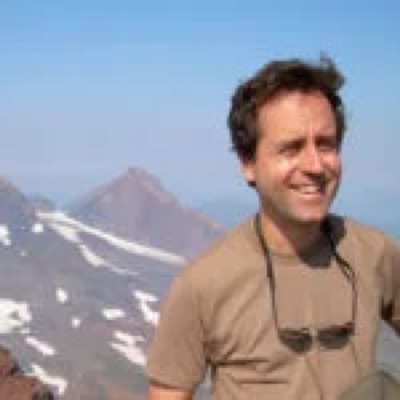
Joseph Harchanko
Score / Cello Performances
Read bio
Harchanko is an electric cellist and composer based in Salem, Oregon. He has written extensively for traditional instruments, large ensembles, digital media, and film. Harchanko received an ASCAP Film Scoring Fellowship to the Aspen Music Festival and has received fellowships from the Lilly Endowment and the University of Texas. His works have been performed across North and South America, Europe, Asia, and Australia including performances at New York’s Carnegie Hall, London’s Colourscape installation, France’s Bourges and Videoformes festivals, The Korean Electroacoustic Festival, and New Music Tasmania.
You may contact Joe Harchanko at: harchanko@gmail.com.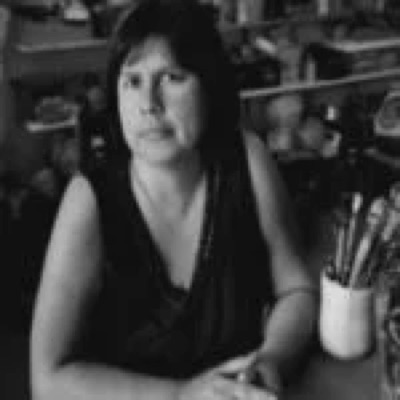
Leticia V. Huerta
Visual Artist
Read bio
Leticia Huerta earned a Bachelor of Fine Arts at the University of Texas at San Antonio in 1985 and a Master of Fine Arts in Painting in 1991 at Southern Methodist University in Dallas, Texas.Huerta has exhibited locally, nationally, and internationally. The Museum of Fine Arts in Boston, Massachusetts, the Mexic-Arte Museum in Austin, Texas, the San Antonio Museum of Art, in San Antonio, Texas, the Meadows Museum in Dallas, Texas, and the Art Museum of South Texas in Corpus Christi, Texas have collected her work. Huerta has attended residencies at the McColl Center for the Arts in Charlotte, North Carolina, Coronado Studio in Austin, Texas, Self Help Graphics in Los Angeles, California, and the Vermont Studio Center in Johnson, Vermont.
She has worked on numerous public art projects, most of them involving the community, design teams, and fabricators. Her completed projects include transit stations in Dallas, Texas for the Dallas Area Transit System, the Charlotte [North Carolina] Area Transit System, and the Phoenix [Arizona] Metro. In addition to transit projects, Huerta has completed streetscape and park projects including the Hemphill / Berry Urban Village Streetscape Project in Fort Worth, Texas and the Nani Falcone Park Bench Project in San Antonio, Texas. Huerta’s studio work is in mixed media combining text and images that allude to personal reflection as well as universal themes about identity, love, death, pain and joy. Among her studio work are “A Seed,” “Élégie,” “Mi familia,” “Padre Nuestro,” which she lent to the Huntsville Immigration Initiative, LLC for inclusion in The Second Cooler.
Huerta is a native San Antonian. Her family dates back several generations in San Antonio and Brownsville, Texas. She maintains a studio and home outside of San Antonio. You may contact her at leticiavhuerta@yahoo.com.
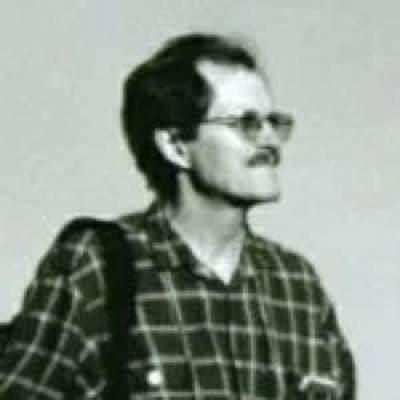
Michael Hyatt
Photographer
Read bio
Michael Hyatt’s interest in photography began in 1968 after he saw the documentary work of Walker Evans, Dorothea Lange, and Henri Cartier-Bresson. This led to an active eleven-year period doing street photography in Boston and Los Angeles. His portfolios from this period focus on Boston’s Italian neighborhood and on the residents and transients in and around the Chapman Hotel at the corner of 5th & Wall Street in Los Angeles.
In 1979 Hyatt spent a month photographing in Ireland. While there he photographed the all-female Irish punk rock band, The Boy Scouts, which inspired him to pursue the Los Angeles music scene upon his return. Within the month he began documenting the performances and backstage activities of the prominent punk rock and roots rock bands of the era including X, The Blasters, and Los Lobos. Hyatt also documented the fascinating and visually stimulating audience for this music.
Between 1986, when he moved to Arizona, and 2002, he photographed a variety of subject matters. Then in October, 2002, Hyatt began documenting the efforts of Humane Borders, the volunteer organization that places water stations in the desert to help prevent migrant deaths, and lobbying for more humane border policies. A year later, he began documenting the humanitarian work of Samaritans, a group which takes food, water, and first aid supplies onto the migrant trails, and of the No More Deaths coalition of migrant relief groups. During this period, the University of Arizona Press invited Hyatt to photograph Organ Pipe Cactus National Monument west of Tucson on the US / Mexico border for its Desert Places book series. The result was Organ Pipe–Life on the Edge, published in August, 2004. Soon after, The University of Arizona Special Collections, associated with The Center for Creative Photography, commissioned Hyatt to produce a limited edition box set of photographs. Hyatt’s contribution was Along the Migrant Trail which contains thirteen gelatin silver prints sized 4″ X 5″. The set is displayed in a jewel box with a cover sleeve, list of photographs, and a booklet describing the work illustrated with three additional photographs.
In May, 2007, The University of British Columbia awarded Hyatt and cultural geographer Juanita Sundburg a Hampton Research Fund Grant titled Documenting New Cultural Landscapes of Immigration in the United States-Mexico Borderlands. The same month, Great Circle Books in Los Angeles published Hyatt’s monograph Migrant Artifacts: Magic and Loss in the Sonoran Desert. In April, 2008, it won an annual Eric Hoffer Independent Book Publishing Award in the category of Art. Photographer’s Forum included the book’s cover photograph in its Annual–Best of 2009.
To view Hyatt’s award winning book Migrant Artifacts: Magic & Loss in the Sonoran Desert go to Photography, then Books at:
www.michael-hyatt.com.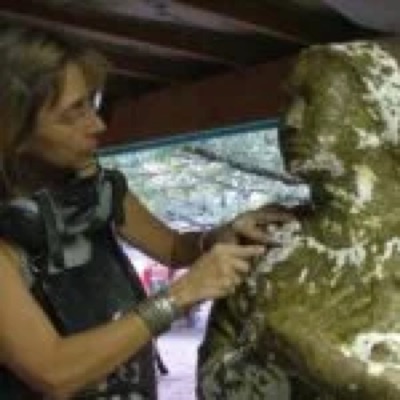
Valarie Lee James
Read bio
Valarie James is a sculptor, writer and Benedictine Oblate from the Arizona/Mexico border, specializing in Contemplative Arts. She has designed and created public memorials that mark those who have died in the desert crossing the U.S./Mexico border and most recently, a collaborative International Installation on the hardship and hopes of family and migration.
In 2005, James and her colleagues created “The Mothers; Las Madres/No Mas Lagrimas; No More Tears” Memorial figure sculptures on the Main (East) Campus of Pima Community College, Tucson, AZ. In 2007, James along with sculptor Antonia Gallegos, mounted “The Migrant Shrine; El Santuario Migratorio” at Tucson’s Southside Presbyterian Church. Both public art installations were created from found denim and burlap, plaster, concrete and steel. Currently (2010 – 2012), the installation: “Hardship and Hope: Crossing the U.S. Mexico border", a found object assemblage created by James and Gallegos can be viewed at “Destination X,” an exhibit on world-wide migration at the Museum of World Culture in Goteburg, Sweden.
Classically trained in Pietrasanta, Italy and the Academy of Art in San Francisco among others, James is a former Art Therapist and Sculpture Instructor. She and her art have been profiled in the Wall Street Journal, Fiber Arts Magazine, Italy’s Corriere della Sera, and on Univisión in Miami to name a few and the artist’s own border arts essays have been published in the Hummingbird Review and Science of Mind.
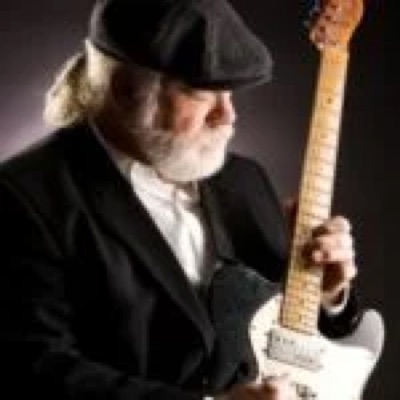
Microwave Dave
Songwriter / Performer
Read bio
Microwave Dave is an Alabama traditional blues musician who, with his band, “The Nukes,” has an international following. Writer Stephen King ended his seven year column on popular art in Entertainment Weekly by writing, “I want to beg you to . . . [go to YouTube and] check out Microwave Dave and the Nukes blasting ‘Highway 49’. . . .That electric slide will change your way of life.”
Over the course of his career, Microwave has developed a solo electric blues style utilizing real-time loop accompaniment. His bio includes such legends as producer Johnny Sandlin, artists Aretha Franklin, Bo Diddley, and Johnny Shines, and such awards as Canada’s REAL BLUES 2003 Southern Blues Guitarist of the Year / Modern. In 2003, The Nukes’ album, “Atomic Electric,” won awards in Canada’s REAL BLUES competition in the Southern Blues Releases and Southern Blues Band categories, and Microwave Dave was named “2003 Southern Blues Guitarist of the Year/Modern.” In 2004, Microwave Dave’s LoweBow instrumental, “Trail of Tears,” was nominated in the “Best Other Instrument” category by Nashville’s Music City Blues Society.
The Huntsville Immigration Initiative, LLC commissioned Microwave Dave to do two pieces for The Second Cooler which he provided enthusiastically and pro-bono. The resulting “Why Did You Take My Job?”, a song in the modern country blues idiom, expresses real anger over the recklessness of corporations and politicians who just can’t get enough, coveting even blue collar workers’ factory jobs. His Ry Cooder influenced Lowebow instrumental, “Guests Who Work,” suggests the alarming nature of the Federal guest worker program.
You may contact Microwave Dave Gallaher at http://www.microwavedave.com/home.htm
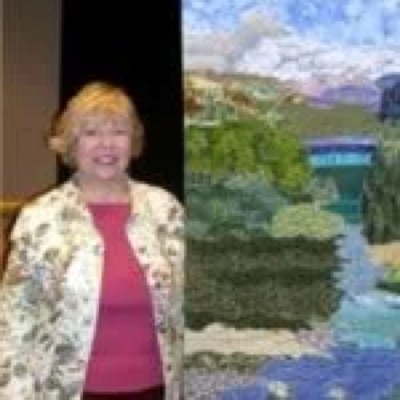
Barbara Mitchell
Textile Artist
Read bio
Barbara Mitchell has sewn and stitched most of her life. She has taken courses in drawing, watercolor, acrylics, and art history. Her media are fabric and fibers. She makes contemporary art quilts, clergy stoles, liturgical banners, fiber-wrapped wall hangings, and one-of-a-kind purses.
All Mitchell’s designs are original. They include such abstract designs as “Everything is Not Always in Black and White” and such representational designs as “Exploring Turtle Island.”
Others, such as “Eclipse: Moving Through the Darkness,” which was included in the Sacred Threads biennial exhibition outside Washington, D.C. in the summer of 2011, are cross-over pieces which can be interpreted literally or experientially. God’s creation, travel, archetypes, and literature all influence her work. Mitchell’s goal is to bring awareness of God’s love and the beauty of God’s creation to the viewer. She exhibits her work in juried art shows in the Southeast, primarily in Alabama.
Early in 2011, The Huntsville Immigration Initiative, LLC commissioned a piece of fiber art for The Second Cooler. Ellin Jimmerson wanted her to help interpret the devastating impact of the Central American Free Trade Agreement on the once-thriving textile industry in Fort Payne, Alabama. Reflecting her interest in architecture, she conceived and executed “Transitions,” which interprets a sock factory moving from a brightly lit building to a closed and dark one.
Mitchell’s website is www.barbara-mitchell.com. You may contact her at contactbabette@barbara-mitchell.com.
Alberto Morackis (1959-2008)
Visual Artist
Read bio
Alberto Morackis was a muralist, painter, and illustrator in Nogales, Sonora, Mexico. He was a principal artist at Nogales’s important Taller Yonke (Junk Workshop). He exhibited individually and collectively in Mexico and the United States. He received numerous honors from the Sonora Culture Institute and the US / Mexico border art competition “Ford-Pollock-Suigueiros” funded by the National Council for Culture and the Ford Foundation. He was a member of Nogales’s Municipal Council for Culture and Arts from 1999-2000.
With his business parter, Guadalupe Serrano, Morackis designed, executed, and installed “Paseo de Humanidad,” a serious of painted aluminum cut-outs detailing aspects of migrant crossing experiences. It is affixed to the Mexican side of the U. S. border wall at Nogales. A portion was recently re-located to the Karin Newby Gallery in Tubac, Arizona, USA. His sculpture, “Border Dynamics” also done in collaboration with Serrano, is located on the campus of the University of Arizona in Tucson, Arizona, USA.
Only a few weeks after we interviewed him in his studio, Morackis died unexpectedly of pneumonia. Our interview was his final one.
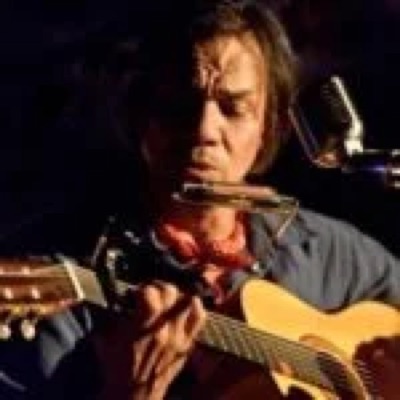
Pablo Peregrina
Songwriter / Performer
Read bio
Tucson’s “Pablo” is a third-generation tile artist, troubadour, and volunteer with Humane Borders, a group which legally places water for migrants in Arizona’s Sonora Desert. When he performs, he always wears a migrant’s bandana which he has found in the desert. Of the habit he says, “I wear them because they carry the spirit of my people–the brown Aztecs, Mayans and all the other indigenes, some who survive and some who perish in our back yard–the unforgiving desierto.” He lent two of his songs to The Second Cooler and a third to the documentary’s CD.
With his strong, poignant falsetto, Pablo’s searing “A Migrant’s Sufrimiento” is a prayer for survival in the treacherous Sonora Desert. His chilling “Run, Run, Run” seems to allude to the children’s nursery rhyme while referencing the dangers of the “coyotes’ domain.” One of Pablo’s newest songs, “Josseline,” is a bonus track on The Second Cooler’s CD. Tucson artist Nanette Robinson provided the lyrics. Telling the story of the death of 14 year old El Salvadoran migrant, Josseline Jamileth Hernández Quintero, who died cold and alone in the Sonora Desert, the song is about state-sponsored stolen childhoods.
You may contact Pablo at pabloperegrina@gmail.com.
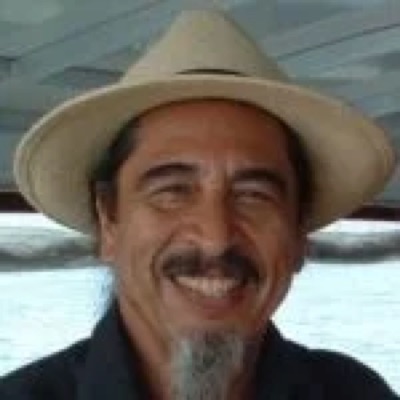
Alfred Quíroz
Visual Artist
Read bio
Quíroz is Professor of Painting and Drawing at the University of Arizona in Tucson, Arizona, USA. His contemporary narrative paintings have been exhibited internationally and reviewed by many magazines including Art in America, Artforum and many others. His satirical paintings are noted for his outraged attention to murderous injustices including the killing fields of Cambodia, rafters of Haitians drowning in the Caribbean Sea, and people “disappeared” by their own governments in South America. For many years, his aluminum cutouts detailing certain realities of illegal migration were on the U.S. border wall on the Mexican side in Nogales, Sonora, Mexico.

Sarah Reynolds
Visual Artist
Read bio
Reynolds is a radio producer and multimedia storyteller. She produces stories for public radio and specializes in digital storytelling, devising and producing multimedia for the non-profit sector as a way of improving the receptivity and messaging of an organization's work, building arsenals of stories that often go untold.
Reynolds worked in labor law as an investigator before making the move to radio and multimedia documentary. A large body of her investigative and documentary work has focused on immigrant communities around the U.S. and has been published in numerous reports by the Southern Poverty Law Center, the Brennan Center for Justice and the Center for American Progress. In 2009, Sarah won a Project Censored Award for her investigative work on Close to Slavery: Guestworker Programs in the United States. Her multimedia work on migrant farmworkers was also chosen for screening at the Women and Minorities in Media Festival in 2011.
Reynolds formally trained in radio at the Salt Institute for Documentary Studies after which she worked with Atlantic Public Media on Cape Cod and with the Peabody Award winning Transom.org, while reporting for the local NPR station, WCAI. She has also reported, written and produced for the WNYC newsroom and for the New York Press Club Award winning political news website, WNYC's It's a Free Country.
Her work has taken her around the globe and has been aired on NPR's All Things Considered and Weekend Edition and other national programs including Studio 360 and The Story. She has taught radio with WNYC's Radio Rookies, a youth radio project in New York City, the Transom Story Workshop and at the Polytechnic Institute of NYU.
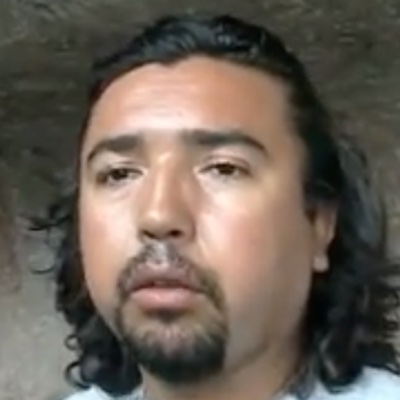
Guadalupe Serrano
Read bio
Guadalupe Serrano lives in Nogales, Sonora, México where he is an active muralist, painter, and illustrator. He is a member of Nogales’ highly-regarded “Taller Yonke” or Junk Workshop. Serrano produces art for public, urban spaces. Among the Workshop’s most significant works are the highly colored, mixed media series depicting migration issues installed on the Méxican side of the United States Department of Homeland Security’s corrugated metal and barbed wire fence which divides the US from Mexico. The series was co-produced with the late Alberto Morackis.
His “Border Dynamics,” a metal sculpture now on the campus of the University of Arizona in Tucson, also was co-produced with Morackis. Serrano was a member of the Nogales Municipal Council for Culture and Arts, 1999-2000. He won the State of Sonora Culture Institute’s Plastic Arts contest in 1996 and 1997. Bill Schweikert’s photos of these works, as well as of Taller Jonke’s mural depicting the Mexican countryside were the starting points for the look of The Second Cooler.
Serrano later generously donated the use of his paintings, “Untitled (with Angels and Border Wall),” “Untitled (with Helicopter and Border Dogs),” and “Juan Soldado.”
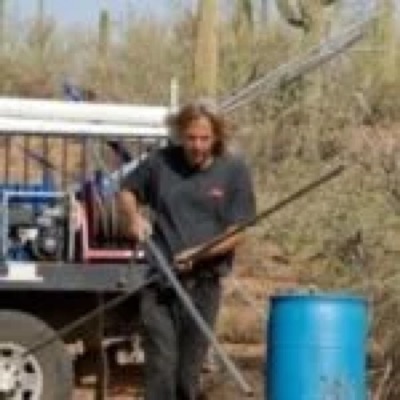
Joel Smith
Photographer
Read bio
Photographer Joel Smith is a United States Air Force brat and Marine Corps veteran. He resides in his place of birth, Tucson, Arizona, USA. Currently, he is Operations Manager for Humane Borders, a 501 C-3 non-profit organization which places emergency water stations on routes used by migrants coming north through the Sonora Desert. He graciously lent multiple of his photos to The Second Cooler
You may contact Joel Smith and find out more about Humane Borders at www.humaneborders.org.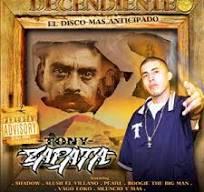
Tony Zapata “El Descendiente”
Songwriter / Performer
Read bio
Tony Zapata is a hip hop artist living in Birmingham, Alabama, USA. He was born in Monclova, Coahuila, Mexico, a city located three hours from Mexico’s border with Texas, USA. His family moved to Nuevo Laredo, Mexico looking for better economic opportunites. When things didn’t work out, and they became increasingly concerned about the violence of the border, the family migrated to Georgia, USA. Later, they moved to Alabama which, they felt, was a friendlier state to live in.
Zapata’s music is a way of life with him. It is how he expresses himself and how he communicates with the Hispanic community. In his music, he takes on real-life issues, especially how Latinos like him face life in the USA. His songs are about discrimination, life on the streets, poverty, education–in short, every day struggles. So, although Zapata’s music is about and for Latinos, he also believes it is universal in that it addresses the struggles of all kinds of people of all ages. His CDs are Real Revolution and El momento esperado [The Awaited Moment],.
You can buy them at: http://www.cdbaby.com/cd/realrevolution and at: http://www.cdbaby.com/cd/tonyzapata or on i tunes at:
http://itunes.apple.com/us/album/real-revolution/id373700119?ign-mpt+uo%3D4 and http://itunes.apple.com/us/album/elmomento-esperado/id305552008
You may contact Tony Zapata at:
tony z - tonyzzboyz77@hotmail.com