Books
 Book
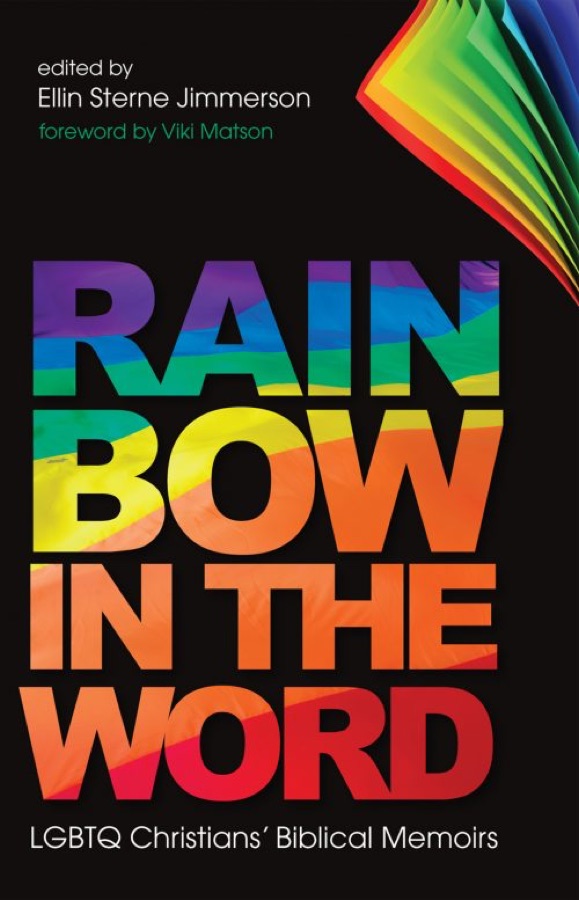
Rainbow in the Word: LGBTQ Christians' Biblical Memoirs
Ellin Sterne Jimmerson, editor · Wipf & Stock, 2017
LGBTQ Christians read, love, scrutinize, become absorbed with, and find deep spiritual meaning in the Bible. It is they whose rare insights into particular Bible stories and characters, told with poignancy and clarity, reveal a gay-friendly Bible and a gay-friendly God who cherishes and needs them just as they are. If given free rein, these inventive, challenging, and profoundly engaged evangelists may be the ones we have been waiting for to rescue biblical interpretation from those who too often are not only hurtful but dismal and boring. Thank God for them!
AmazonBarnes & NobleWipf & Stock
Reviews and contributors →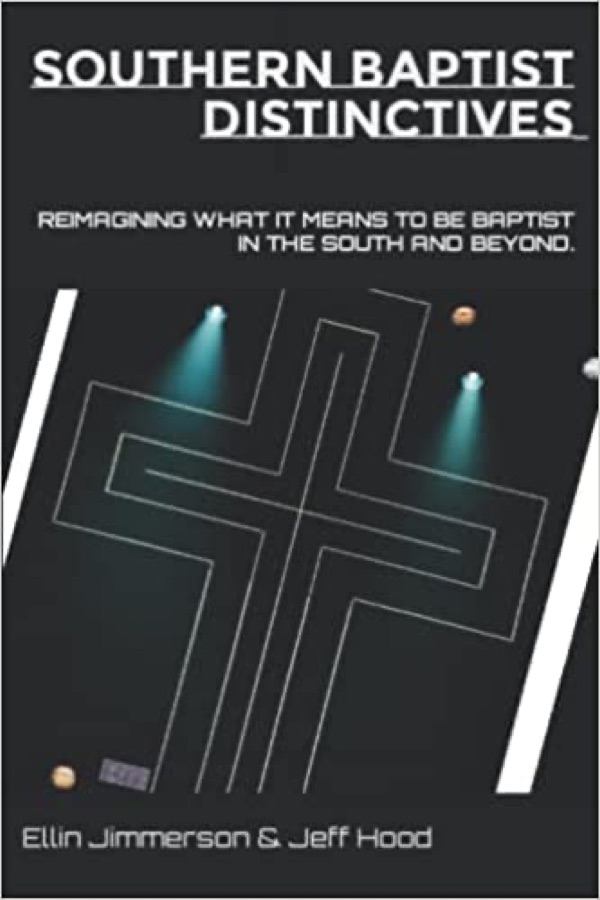 Book
Southern Baptist Distinctives: Reimagining What It Means to Be Baptist in the South and Beyond
Jeff Hood and Ellin Jimmerson · December 2021
At the dawn of new ways of thinking about about God . . . and perhaps most often not thinking about God at all . . . leading Southern intellectuals Ellin Jimmerson and Jeff Hood come together to discuss what it means to be Baptist in their particular context and beyond.
 Book chapter
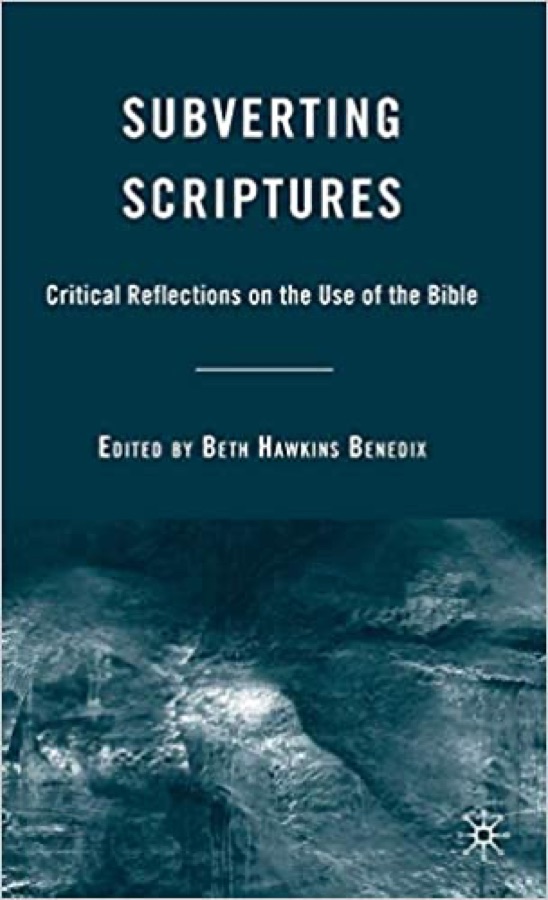
“In the Beginning: Big Bang”: Violence in Ernesto Cardenal's Cosmic Canticle
In Subverting Scriptures: Critical Reflections on the Use of the Bible, Beth Hawkins Benedix, ed. · Palgrave Macmillan, 2009
"In this epic poem, Cardenal explores Latin American history by relating the evolution of the universe to the development of human understanding. Throughout, Cardenal blends the visible and the invisible, science and poetry, religion and nature, in 43 autonomous yet integrated cantos." —Ellin Jimmerson, PhD
Reviews of the book (3)
"This provides a new and convincing account of the strategic reception of the Bible in a wide range of writers and thinkers. That such a use can be truly subversive; that it can undermine the very meaning attached to biblical narratives by organized religion, is one of the surprising and exciting discoveries of this readable and intelligent book." — Sander L. Gilman, Distinguished Professor of the Liberal Arts and Sciences, Emory University, Atlanta, Georgia, USA
"This collection provides a wonderful array of essays attuned to the manifold literary and political uses and abuses of scripture in the contemporary world. The contributors show both the need to subvert the presumptions of scripture to overreach its historical contexts and scripture's power to remain a source of critique of the hubristic pretensions of secular culture . . . This collection is full of surprising treasures that serve to open new paths in the study of the relation between the Bible and postmodern culture." — Steven Kepnes, Murray W. and Mildred K. Finard Professor in Jewish Studies and Religion, Colgate University, Hamilton, New York, USA
"This could not be more timely or more crucial; in a period where we are ever more conscious of the effect of the appropriation, manipulation, subversion, or reinterpretation of canonical religious texts for at times bewildering variety of purposes, any attempt to examine the phenomenon is highly welcome...The 'subversive' literary works covered in the contributors' selections constitute a dazzling array of choices. They provide ample proof of the book's value as a vital way of thinking about international literary culture. This has the potential to be a frequently consulted and often thumbed anthology of secondary literature that creatively rediscovers a perennially absorbing topic." — Jeremy Dauber, Associate Professor of Yiddish Language, Literature and Culture, Columbia University, New York City, NY, USA
 Book chapter
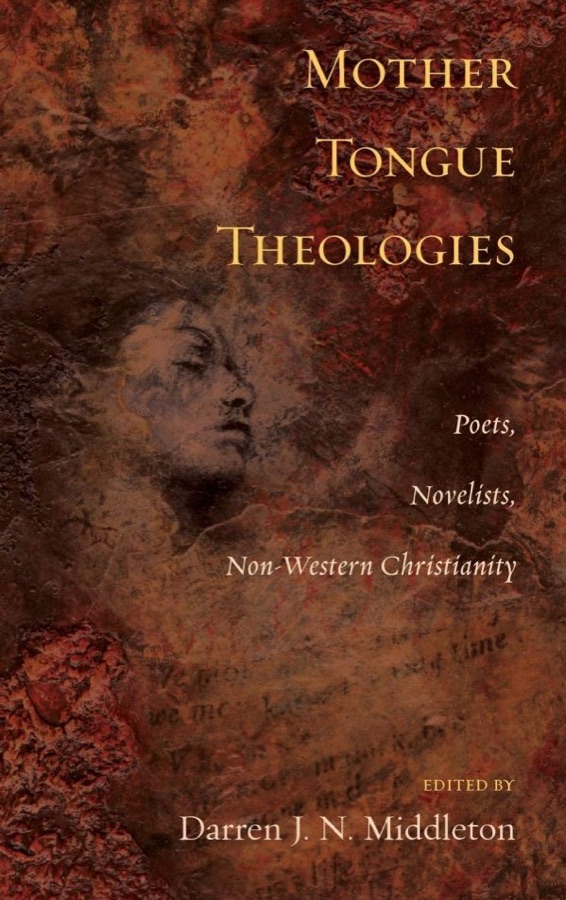
“They Come Smiling Out of the Morgue”: Historical Resurrections in Ernesto Cardenal's Nicaragua (1934–1970)
In Mother Tongue Theologies: Poets, Novelists, Non-Western Christianity, Darren N. J. Middleton, ed. · Wipf and Stock, 2009
"Ellin Sterne Jimmerson addresses one of the most widely-read poets in the Spanish language—Ernesto Cardenal—Roman Catholic priest, liberation theologian, and onetime Minister of Culture in Sandinista Nicaragua. As Jimmerson makes clear, his work consistently grapples with such issues as the theological legitimacy of violence in the Nicaraguan context, such themes as the resurrection, and such personalities as U. S. backed Nicaraguan dictator, Anastasio Somoza García, and his National Guard."
AmazonAmazon (Kindle)Amazon (paperback)
Reviews of the book (4)
“Novels are the most attractive means of presenting specific situations. Thus Mother Tongue Theologies provides specific contextual portrayals of global and diverse Christianities, from Eastern orthodoxy to Native (or First Peoples) American. These portrayals, whether positive or negative, are means to understanding both the other and one's own understanding of Christianity. Required source for all learning about religion in the non-Western world. —
Iain S. Maclean, James Madison University, Harrisonburg, Virginia, USA"In a world where the reality of globalization pervades our every experience, it is only right we should now have a volume that explores so ably the globalizing of Western Christianity — =and not only its theology, but the means of expressing that theology. The re-configuration, and in some cases re-creation, of Christian meaning into local language, as impressively drawn into a collective here, invites us now to think in terms of a transnational aesthetic, one which carries new potential for our understanding of ‘transcendence’.”— Andrew W. Hass, University of Stirling
“This book presents the reader with a remarkable array of essays on Christianity in world literature outside the Western tradition, from Christian communities both ancient and modern. It demonstrates the power of poetry and fiction to illuminate the riches of a religious tradition that is capable of extraordinary cultural adaptations in a diversity of political and historically defined contexts. It should be widely read in the West as a brilliant illustration of imaginative and intellectual capacity of the Christian churches both new and old throughout the world.”— David Jasper, University of Glasgow, Glasgow, Scotland and Renmin University of China, Beijing, China
“This highly ambitious volume extends the study of the relationship between Christianity and literature to a global context, beyond the Western world to which the vast preponderance of previous scholarship has heretofore confined itself. Given this purpose, the volume necessarily and explicitly focuses upon 'non-Western' Christianity, dividing the subject up, not only culturally, but also, in effect, according to geography. It is a pathbreaking book in the most positive sense of the metaphor.”— Eric Ziolkowski, Lafayette College, Easton, Pennsylvania, USA
 Book chapter
Reflecting on the Migrant Trail Walk
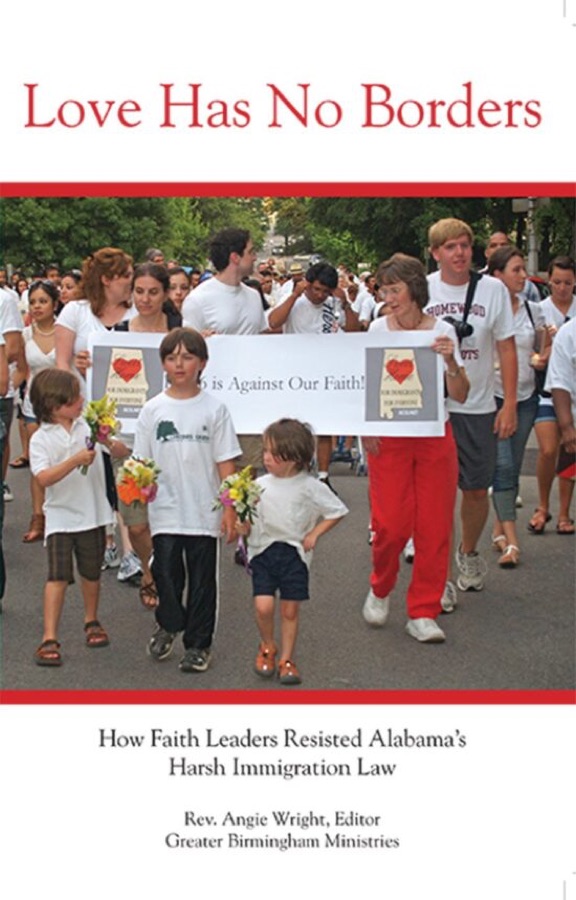
In Love Has No Borders: How Faith Leaders Resisted Alabama's Harsh Immigration Law, Rev. Angie Wright, ed. · Greater Birmingham Ministries, 2013
"In 2011 the legislature of Alabama passed the harshest anti-immigrant bill in America, and the governor of Alabama signed it into law. One legislator said that the purpose of the law was to make undocumented residents "so miserable that they self-deport." Faith leaders in Alabama came together in unprecedented ways to oppose the mean-spirited law. They organized rallies and marches attended by thousands of people. Four bishops in three denominations (Episcopal, Methodist and Roman Catholic) sued the State of Alabama. . . . This book is a visual and written record of public protests by Alabama faith leaders against a law that violated the consciences of Jews, Christians, and Muslims alike. For those who love their neighbors as themselves, love has no borders."