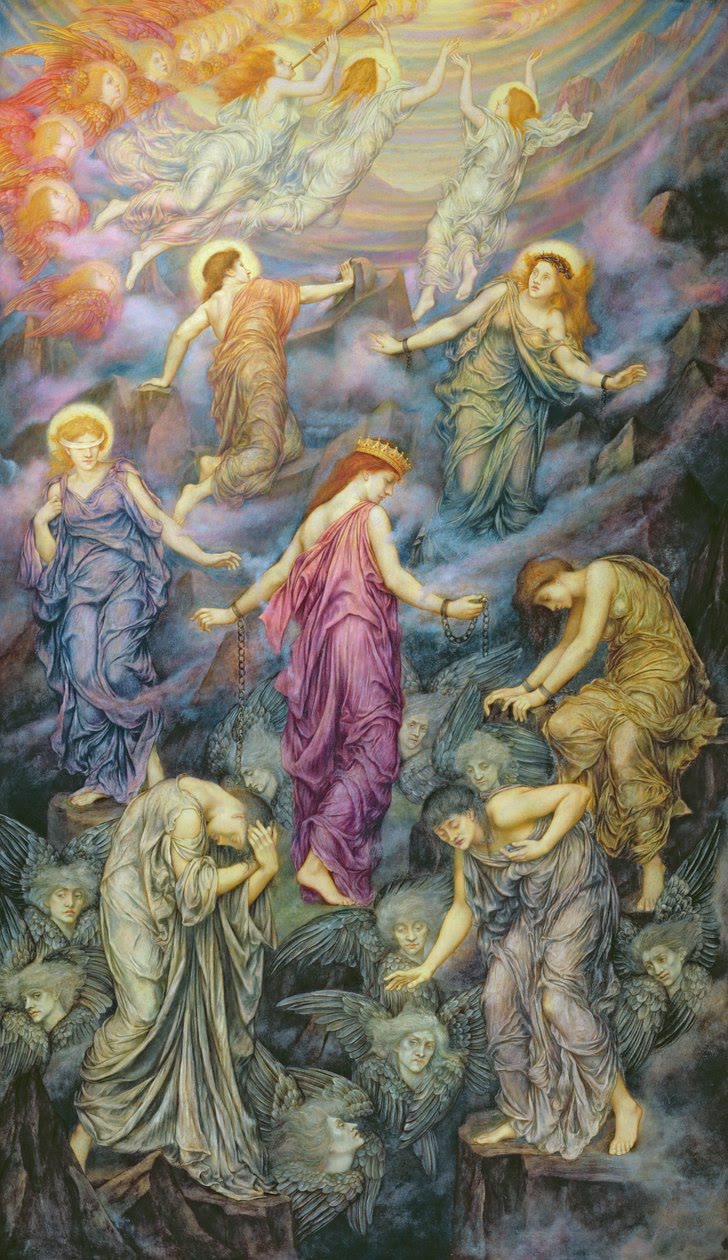
The Kingdom of Heaven Suffers Violence
Zechariah 9:9-12 · Matthew 11
It is an interesting coincidence that I was asked to preach on the day after this particular Fourth of July when we celebrate 250 years of the colonies having declared independence from Great Britain. To paraphrase President Trump’s observation, the colonies sent “a single sheet of parchment and 56 signatures” to King George III of the Kingdom of Great Britain. Among its complaints was noted that human beings had an inherent right of revolution. In other words, it was not a right that was given to people by the government. It was a right given by cosmic laws emanating from those greater than the Kings and greater than the Kingdoms.
Kingdom Language: Watch for it!
The focus of my sermon is Matthew 11, but I don’t want to skip over Zechariah’s prophetic words. The context is that God is on the march. Although there are no armies involved, the idea is that God is on a campaign to demilitarize the provinces of Syria, Phoenicia, the Philistines, as well as all the tribes of Israel. God’s plan is to deprive the provinces and tribes of their sovereignty, impose a demilitarized new order on them, and to be the King of this new realm and new way of being.
We hear this in the verses I read earlier. It is a time for rejoicing because a new king, God, triumphant and victorious yet humble is coming. By “humble,” I don’t think Zechariah meant that God shows false modesty. I think the prophet meant that God is not royalty in the conventional sense. God is the opposite of earthly royalty and will defeat the violence of earthly royalty with its war chariots, its war horses, and its war weapons.
Instead, in place of militarism and paranoia, there will be peace. That’s why it is a time for rejoicing. Because, Zechariah promises, “We don’t have to live this way! We don’t have to believe in the promises of the Kingdom of the National Security State which inherently will never lead to peace. Instead, we can rely on the promises of God and let in the Kingdom of Heaven on Earth.
What’s interesting is that all four Gospel writers—Matthew, Mark, Luke, and John—draw on Zechariah when they portray Jesus’s “triumphal entry” into Jerusalem as a king. A king who, without irony, is opposed to the kings. A king who is opposed to the pharaohs, caesars, and presidents of empires and to their obsession with national security, obsessively keeping an eye out for disturbers of Empire’s false peace, and never able to let down their guard.
Zechariah’s prophetic words are hoving in the background of Matthew 11. The named cast of characters in Matthew 11 consists of Jesus, his twelve disciples, John the Baptist, his disciples, the crowds that have gathered to hear Jesus, and God. The contrasting locations are the cities on the one hand and the wilderness on the other. The unnamed cast of characters are the Romans and their Jewish agents. The unnamed location is the Roman Empire.
The Roman Empire, as we know from both biblical sources and historical sources, was obsessed to the point of paranoia with the sovereignty of its borders, with military power (again, we hear Zechariah’s emphasis on defeating the violence of war chariots, war horses, and war weapons), not to mention the false belief that Caesar was, in fact, God.
The story is this.
Jesus has just been talking with his twelve disciples and giving them instructions. He was then going to go into “their cities.” Meanwhile, John the Baptist is in prison. He had been hearing about Jesus and sends some of his disciples to Jesus to ask him, “Are you the Messiah, the One we’ve been waiting for?” Jesus replies, “Well, what does it look like? Go and tell John the Baptist what you have seen and heard: the blind are receiving their sight, the lame are walking, the lepers are healed, the deaf hear.”
There is an implication, because Caesar was constantly telling people that he, Caesar, was the one who heals, that it looks like Caesar is not the one who heals after all. The one who heals is Jesus. Then Jesus goes on to re-phrase what these healings mean. They mean, “The dead are raised. The poor have heard good news in these healings!” It means, as Jesus says explicitly later on, it means God is trying God’s best to get “the Kingdom of Heaven” through. Jesus finishes by saying, I may not look like the Messiah you were expecting. But I am. That the Roman Empire is not the Kingdom of Heaven despite what Caesar says. Seeming to understand him, the disciples leave.
Then Jesus starts talking to the remaining crowd about John the Baptist. He points out that John went into the wilderness. When we think of a wilderness, we may think of areas without people and only wild grasses shivering in the wind. That seems to be what Jesus is asking when he says, “What then did you go out into the wilderness to look at? A reed shaken by the wind?” And he asks again, “What then did you go out to see? Someone dressed in soft robes? Look, those who wear soft robes are in royal palaces.”
This is what we need to know to understand what he’s saying. The “wilderness” along the Jordan River wasn’t exactly a wilderness. Herod had his militarized palaces there: Herodium, Machaerus, and Masada were there. In those palaces were the Empire’s representatives dressed in soft robes. All were fortified installations of the Roman Empire there to surveil borders and control peoples. The Jordan Valley was symbolized by a reed, a symbol which has been found on Herod’s coins.
Jesus concludes by asking again, “What then did you go out to see? A prophet? Yes, I tell you not only is John the Baptist a prophet, he is the one about whom it was written of me, “I am sending my messenger ahead of you, who will prepare the way before you.” But, Jesus goes on to say, “Surely, there has never been a prophet greater than John. Yet, even the least important person in the Kingdom of Heaven is more important than he.”
We need to know that, from Rome’s perspective, John the Baptist was dangerous. He set off a pushback from the Kingdom of the National Security State which understood that the Kingdom of Heaven must not be allowed to arrive fully and unambiguously. “From the days of John the Baptist until now,” Jesus says, “the Kingdom of Heaven has suffered violence, and the violent take it by force.”
Jesus goes on to express his frustration with the people in the crowd. They don’t seem to know what it is that they want. To whom are they pledging their allegiance. “Y’all are killing me right now,” Jesus says. “You say, very enthusiastically, that you want the Kingdom of Heaven on Earth to arrive right here and right now. Yet, you are like kids in a park, hot, bored, and restless. And all the kids are complaining that they are hot and bored and restless. Then one kid, probably a little girl, says, “Let’s play wedding! You can be the groom and you can be the bride and you can be the preacher and you can play the flute and we’ll all dance!” But another little kid says, “I don’t want to play wedding! I’m not in the mood!” And other kids chime in, “No, nobody wants to playing wedding!” So, the little girl who has risen to the top in terms of leadership says, “Then, let’s play funeral! You can be the one deceased and y’all can be the mourners and you can preach the funeral sermon!” And that same little ornery kid says, “I don’t want to play funeral! I’m not in the mood!” And his followers chime in, “Nobody wants to play funeral!”
Jesus interprets his story. He’s really losing patience. John the Baptist comes to lead us into the Kingdom of Heaven, but he doesn’t quite suit you. You say, “He won’t eat. He won’t drink.” So you side-eye him and say, “Who doesn’t eat or drink! He must have a demon in him!”
And then the Son of Man comes to lead us into the Kingdom of Heaven, but he doesn’t quite suit you, either. You say, “He eats. He drinks. He must be a glutton and a drunk. And, also, He hangs out with tax collectors and sinners!”
Y’all say you want the Kingdom of Heaven on Earth, Jesus seems to be saying, but when you have the opportunity to let it in, you get mighty particular.
Over here, we have the inherently violent Kingdom of the Roman Empire which brutally squashes all dissent and all dissenters. And over here, we have the Kingdom of Heaven trying to push through, trying to provide peace to peoples who desperately need peace.
Then, Jesus begins pronouncing “woes” upon the cities where he had carried out most of his “deeds of power”. It is important that his miracles are referred to as “deeds of power,” don’t you think? Remember, we’re thinking about kingdoms, the Kingdom of Heaven v the Kingdom of Rome.
By “woe”, he probably was expressing sorrow over impending misfortune because the very cities in which he performed his miracles failed to repent. They didn’t turn around. They marveled at his deeds, but it didn’t seem to make a difference in their understanding or a shifting of their pledge of allegiance definitively to the Kingdom of Heaven on Earth and equally definitively away from the Kingdom of Rome. They marveled, but they didn’t repent.
We have a choice to make. We can either pledge our ultimate allegiance to the Kingdom of Empire or we can pledge our ultimate allegiance to the Kingdom of Heaven on Earth. But, as Matthew’s Jesus insists, we cannot do both.
← All sermons