Free Trade Agreements: What They Are, Why They Matter
It is almost beyond question among scholars who study illegal immigration that the primary "push factor" behind the outpouring of illegal immigrants from Latin America in the last 20 years is NAFTA—the North American Free Trade Agreement. Free Trade Agreements or FTAs have nothing to do with leveling the playing field or making economies fairer.
Free trade means that the tariffs, or taxes corporations pay to import or export their products, are removed. Therefore, their products move "freely" across borders without tariffs.
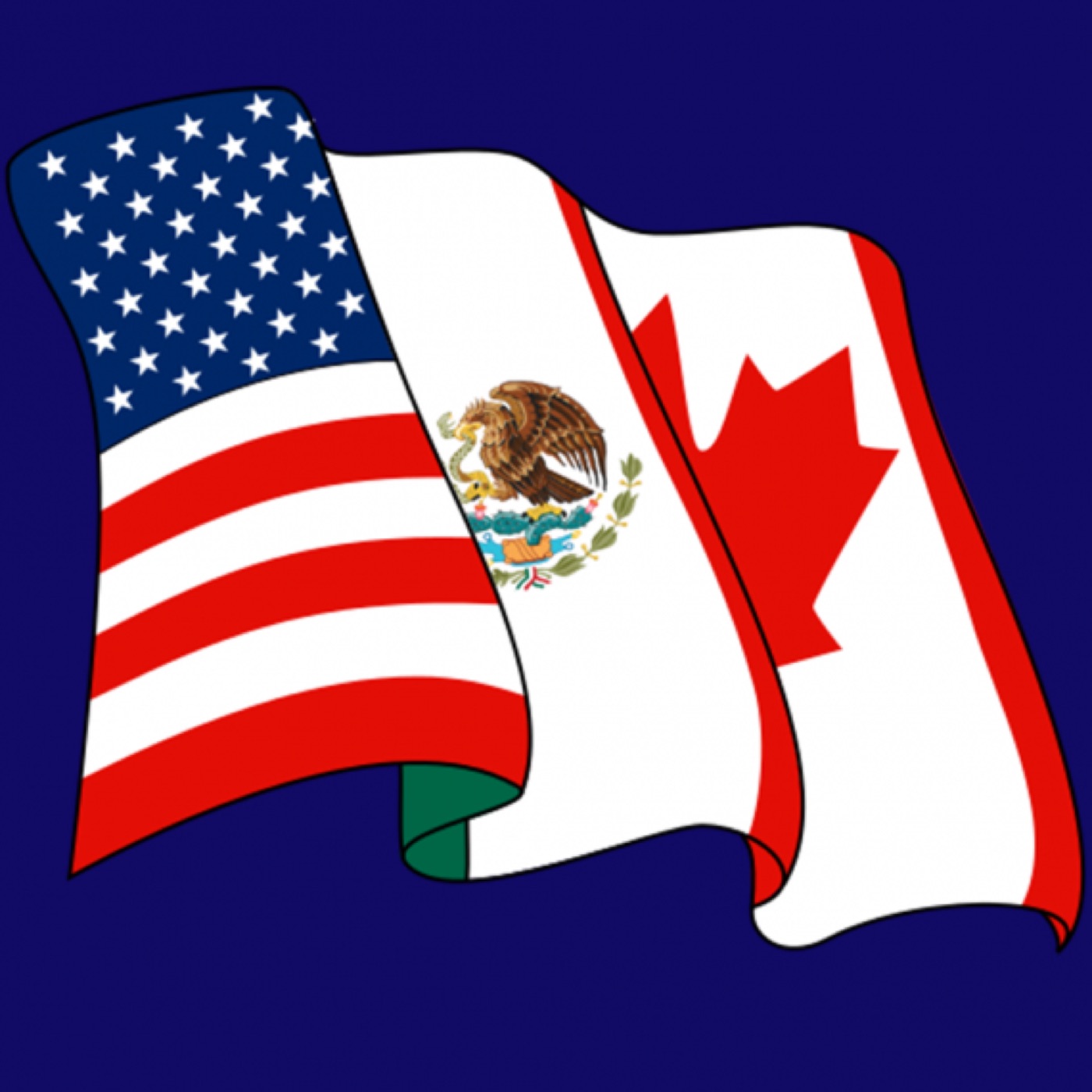
NAFTA was signed by US President Bill Clinton, Mexico's President Carlos Salinas, and Canada's Prime Minister Brian Mulroney in 1992. The broad economic areas affected were automobiles, telecommunications, and agriculture. Let's take agriculture—more specifically corn—as an example of what happened. By lifting the tariffs the big factory producers of corn had been required to pay to export their product to Mexico, for example, they were able to undersell already poor small, traditional Mexican corn farmers. In other words, corporations like Cargill and Archer Daniels Midland were put in direct competition with peasant farmers. These corporations sold their corn at prices much lower than that which small farmers could offer and made substantial profits doing it.
There also is the issue of subsidies. Subsides are payments which governments pay to producers. Small traditional Mexican farmers traditionally had received subsidies from the Mexican government in order to help them survive and stay on their lands. These subsidies were provided by the Mexican Constitution. As a condition of joining NAFTA, Mexico was required to repeal Article 27 of the Mexican Constitution, thereby ending subsidies to the most vulnerable of Mexico's farmers.
However, subsidies paid to US factory producers of corn were not removed. Instead, subsidies to them increased. According to the Environmental Working Group Farm Subsidies Database, between 2005 and 2012 US factory corn producers received $84.4 billion in subsidies.
The combination of the lifting of tariffs and removal of subsidies pushed somewhere around 1 1/2 to 2 million small Mexican producers of corn and other products such as beans off their lands and into migration.
This is not a case of "unintended consequences" or a plan for fairness gone wrong. I have read the North American Free Trade Agreement. It says in plain black and white that the Agreement would displace peoples. That is why the United States / Mexico border was militarized—to control displaced laborers and farmers and keep them from going north to find a livelihood.
As University of Arizona Professor Scott Whiteford says emphatically in The Second Cooler, "the [Mexican] government knew at the time they signed it they were signing away life rights for a large number of its people. It wasn't a surprise to the government leaders and it wasn't a surprise to the peasantry." And, as Samford University Professor Fred Shepherd says in the documentary, "the small farmer just got swept away."
What happened to Mexico's small agricultural producers in Mexico on a catastrophic scale happened to US producers on a smaller scale. That is the reason I wanted to include the sequence on the devastation of the textile industry in Fort Payne, Alabama because of CAFTA—the Central American Free Trade Agreement. The town once billed itself as the "Sock Capital of the World." Its home-grown sock factories were a source of great pride to Fort Payne, having something of the stature of its home-grown Southern rock band, Alabama. Now, having been bought up by Canadian manufacturer, Gildan, its sock factories are in the Dominican Republic where the profits are higher and the working conditions poorer and the people who built the industry have had to move on.
By the same token, the advantage in tomatoes was given to Mexican corporate producers. Small tomato producers in Alabama and elsewhere have been put into competition with cheap factory tomatoes from Mexico and they, too, are having a hard time surviving.
In October, 2011 US President Barack Obama signed three more Free Trade Agreements into being with Colombia, Panama, and South Korea. Terms for the Trans-Pacific Partnership, an agreement among the 12 Pacific Rim Nations, are being negotiated.
In my opinion, it would be folly to believe that future FTAs will operate any differently or have any different outcomes than have previous ones.
We all—Mexicans, Americans, and Canadians—need to understand that we have a common problem in Free Trade Agreements. Once we understand we have a common problem, we can understand there must be a common solution. Any effort to "reform" immigration, at least in large part, must include addressing FTAs.
← All Immigration